

This post may contain affiliate links. Please see our disclosure policy.
Pork Marbella is a classic dish that combines the richness of pork with the sweet and savory flavors of an olive oil marinade. The tender pork is cooked to juicy perfection and laid on top of a bed of leeks, nestled with green olives, prunes, capers, and sauteed shallots. If you’re looking for an unforgettable, show-stopping dish that’s easy to make – this is a must.
For more pork recipes, try my smothered pork chops, pulled pork sliders and oven baked pork tenderloin!
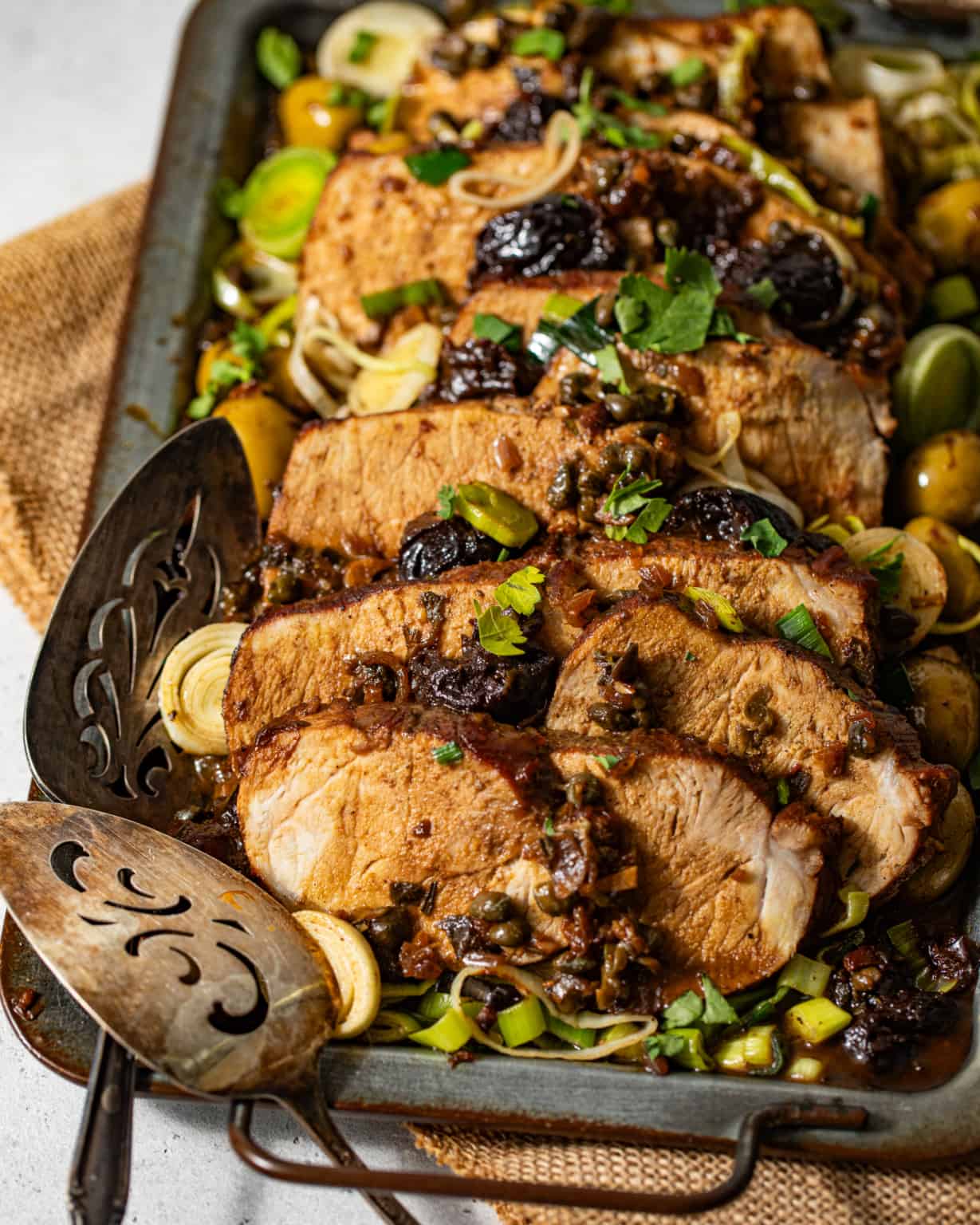
I had SO much fun making this recipe! It’s a riff on the classic Chicken Marbella recipe which is a Jewish-American recipe that came about in the 1970s. The original recipe is typically made with a dry white wine, red wine vinegar, capers, bay leaves, prunes, olives, and fresh herbs. However, it wouldn’t be Britney Breaks Bread if I didn’t mix things up a bit.
So instead of chicken, we’re using pork this time. Pork tenderloin to be exact – and we’re taking the flavor up a notch. I swapped the red wine vinegar for balsamic vinegar and instead of white wine, we’re using red (because we love the deep rich flavors of a red wine).
In addition, I added in some shallots, sauteed leeks, and reduced the marinade and added in dijon mustard and sour cream to make this crazy delicious velvety sauce that goes on top. Umm yum.
We’re taking this vintage dish and bringing it into 2023 with all of the bells and whistles, ok?! Everyday home cookies will look like 5 star michelin chefs with this. Oh, and it’s also super easy to make! Alright, enough talking, let’s make it!
Table of Contents
Here’s What You’ll Need
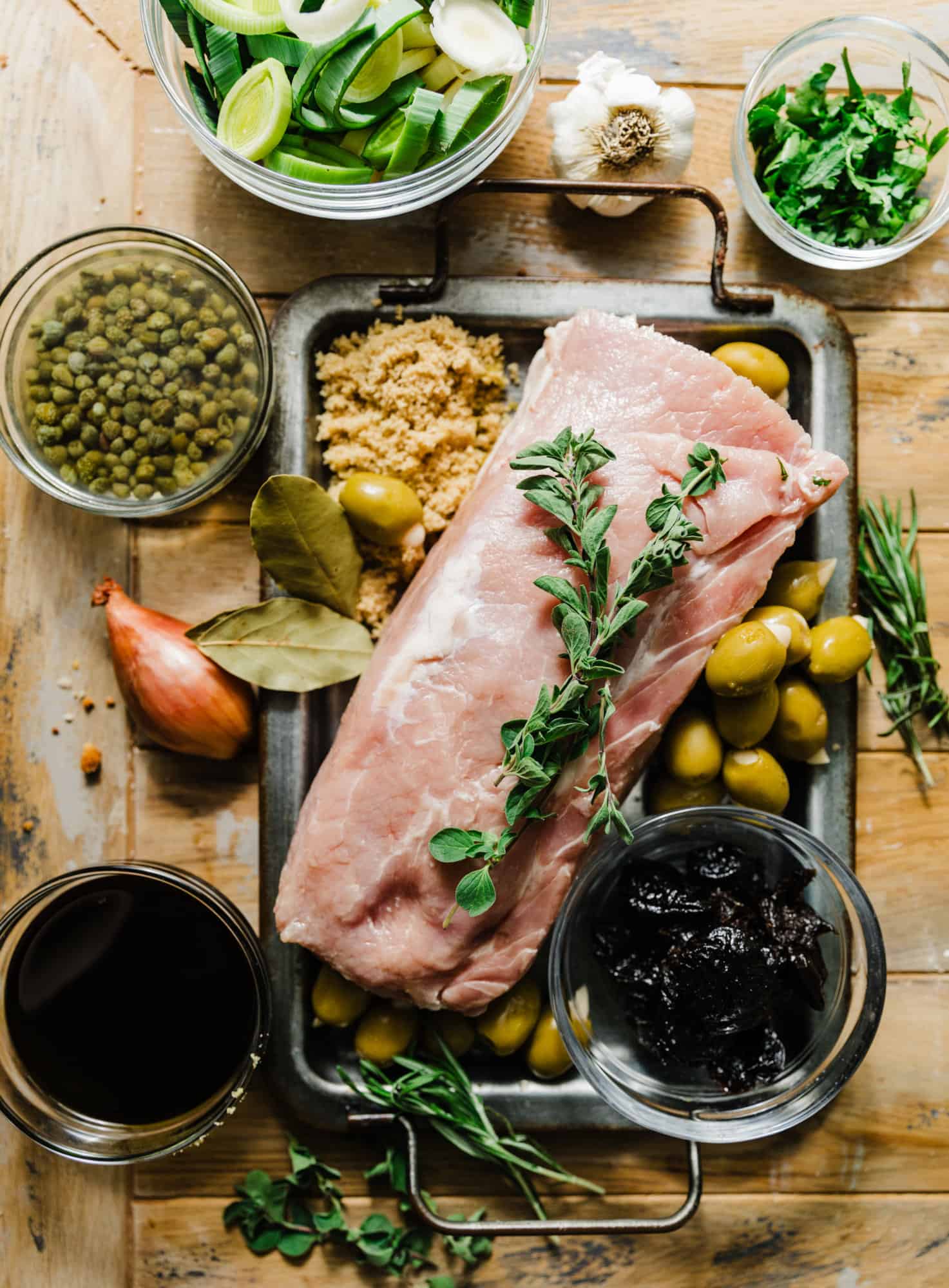
(for the full recipe, see the recipe card for full list of ingredients and quantities)
- Pork Tenderloin: pork tenderloin is typically a lean piece of meat, so try to find a cut with a nice layer of fat and good marbling (if you can. remember fat = flavor).
- Extra Virgin Olive Oil: please be sure to use a quality olive oil! Olive oil is the base of the marinade so you want to make sure you’re using
- Balsamic Vinegar: as mentioned above, balsamic vinegar is being used instead of red wine vinegar. It gives this dish more of a sweet, fruity flavor as opposed to a sour acidic taste.
- Green Olives: if you’re not a fan of olives, you will absolutely become one by the time this dish is done. The olives take on a slightly sweet flavor that’s just out of this world!
- Prunes: don’t turn your face up! Prunes are the bees knees! In fact, did you know that prunes are super nutritious and can help lower cholesterol AND lower blood pressure while still being super delicious?! Don’t leave this ingredient out, it’s a must. It adds a depth of flavor to the pork AND the sauce that is just not the same if you swap it for something else.
- Capers: use the capers WITH the juice. We want all of the briny flavor it has to offer!
- Shallots: shallots have a nice mix of onion and garlic flavor and I love adore them. You can use onion in its place, but it’s worth making that extra trip to the grocery store if you don’t have any!
- Fresh Herbs: rosemary, parsley, and oregano are use in this lovely pork marbella recipe.
- Leeks – leeks impart a buttery yet crisp texture to this dish making it both flavorful and fun to eat.
- Light brown sugar: to cut down on the acidity and promote caramelization of the sauce.
Pro tip: use a meat thermometer or an instant-read thermometer to measure the internal temperature of the pork to prevent overcooking it!
Pro Tips
- Let it Rest:
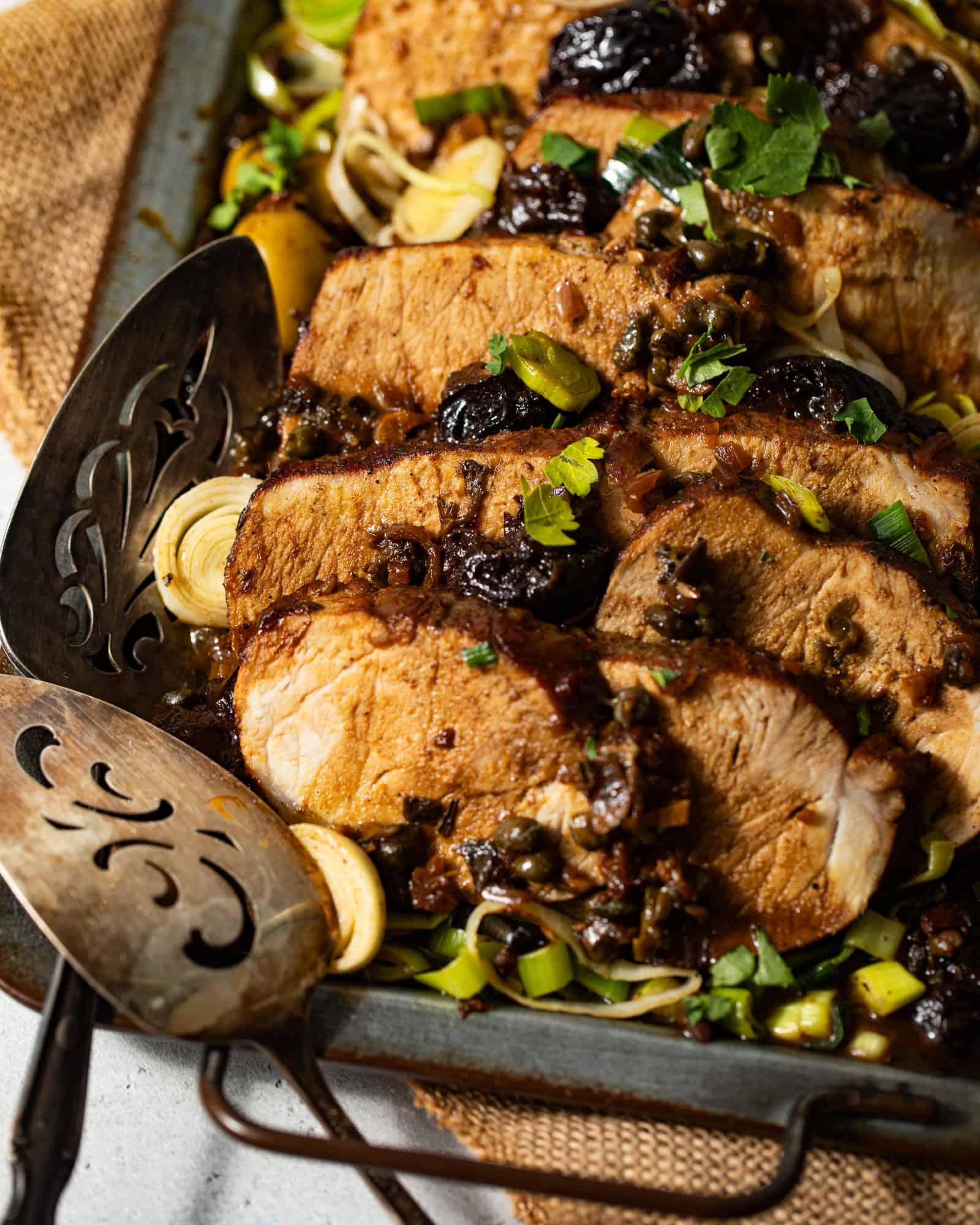
- Allow the pork tenderloin to rest for about 5-10 minutes after cooking. This resting period allows the juices to redistribute throughout the meat, ensuring a moist and tender result when you cut into it.
- Slice Against the Grain:
- When carving the pork tenderloin, slice against the grain. This helps break up the muscle fibers, making each bite more tender.
- Cooking Temperature:
- Use a meat thermometer to monitor the internal temperature of the pork. Cook the pork tenderloin to an internal temperature of 145°F (63°C). Avoid overcooking, as this can lead to dryness.
How to Make Pork Marbella
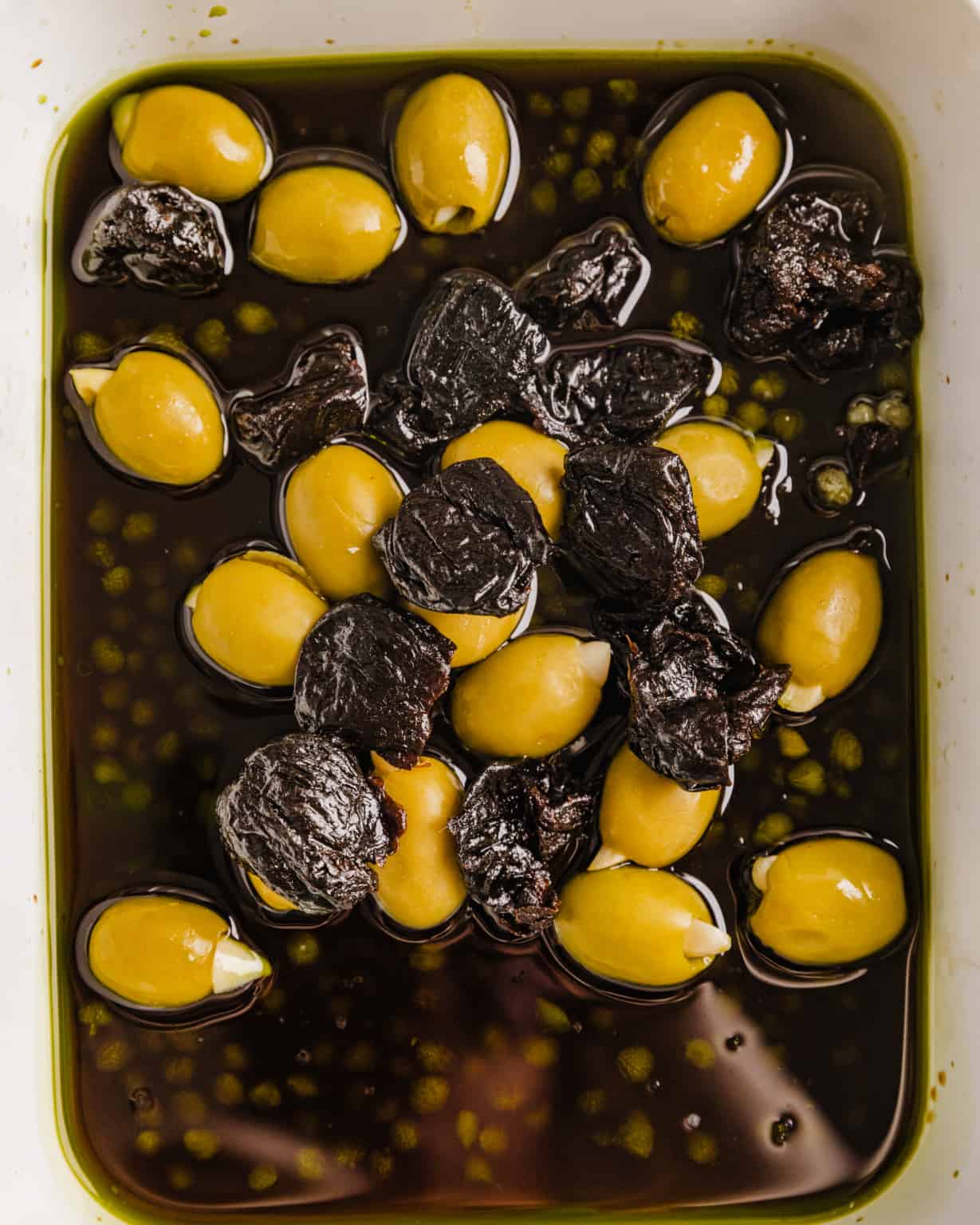
- Combine olive oil, balsamic vinegar, prunes, green olives, capers (with the juice/brine) together in a bowl or a large resealable plastic bag. Add the pork tenderloin and submerge in the marinade. Let the meat marinate for at least 2-4 hours, ideally overnight in the refrigerator.
- Preheat the oven to 425 degrees. Let the meat sit at room temperature for 30 minutes. Remove the heat from the marinade (don’t throw it out!) and pat dry with paper towels. Season pork with black pepper and kosher salt.
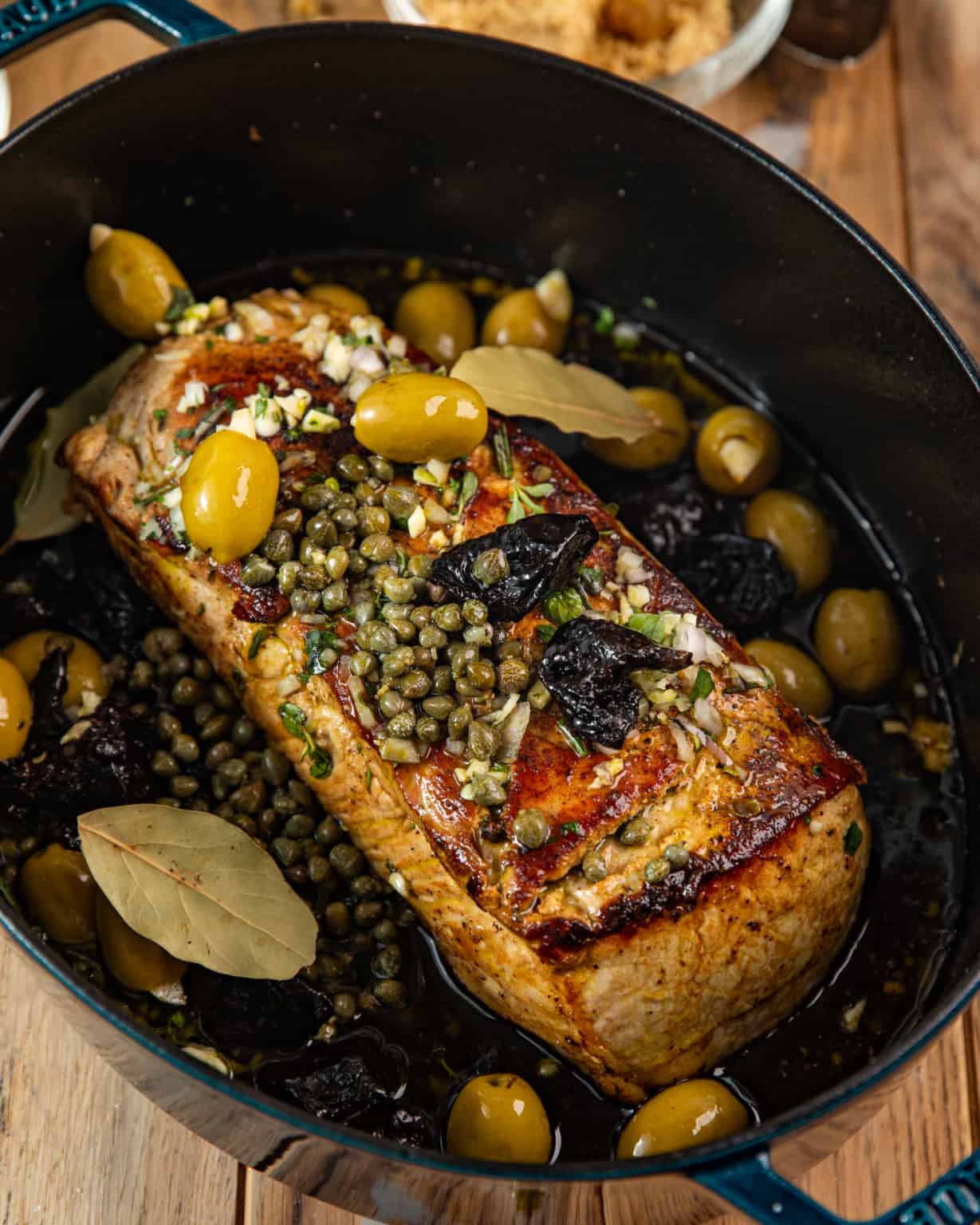
- Then add a generous amount of extra-virgin olive oil to a dutch oven or large oven safe pan. Sear the pork on all sides until golden brown, then lower the heat to medium-low and add the diced garlic cloves, shallots, rosemary, and oregano. Cook until shallots are slightly softened. Remove from heat and pour the reserved marinade on top of the pork along with the brown sugar and pour in red wine. Toss together, cover with a lid, and cook for 20 minutes, covered, and then 5-10 minutes uncovered, or until the internal temperature reaches 140 degrees F.
- While the pork is cooking, saute the leeks. Add salted or unsalted butter (whatever your preference) to a skillet over medium-high heat and add the leeks. Season with salt and pepper and remove from heat when the leeks begin to soften and brown, about 4-6 minutes.
- Remove pork and strain the juices into a large bowl, removing all of the prunes, olives, shallots etc from the pan. Add the juices back into the pan and bring to a boil to reduce by half. Once reduced, whisk in dijon mustard and remove from heat and add sour cream, whisking until smooth.
- Add the leeks to the bottom of a serving dish, place the pork on top, and pour the sauce, olives, capers, and prunes on top. Garnish with fresh parsley.
What to Serve with Pork Tenderloin
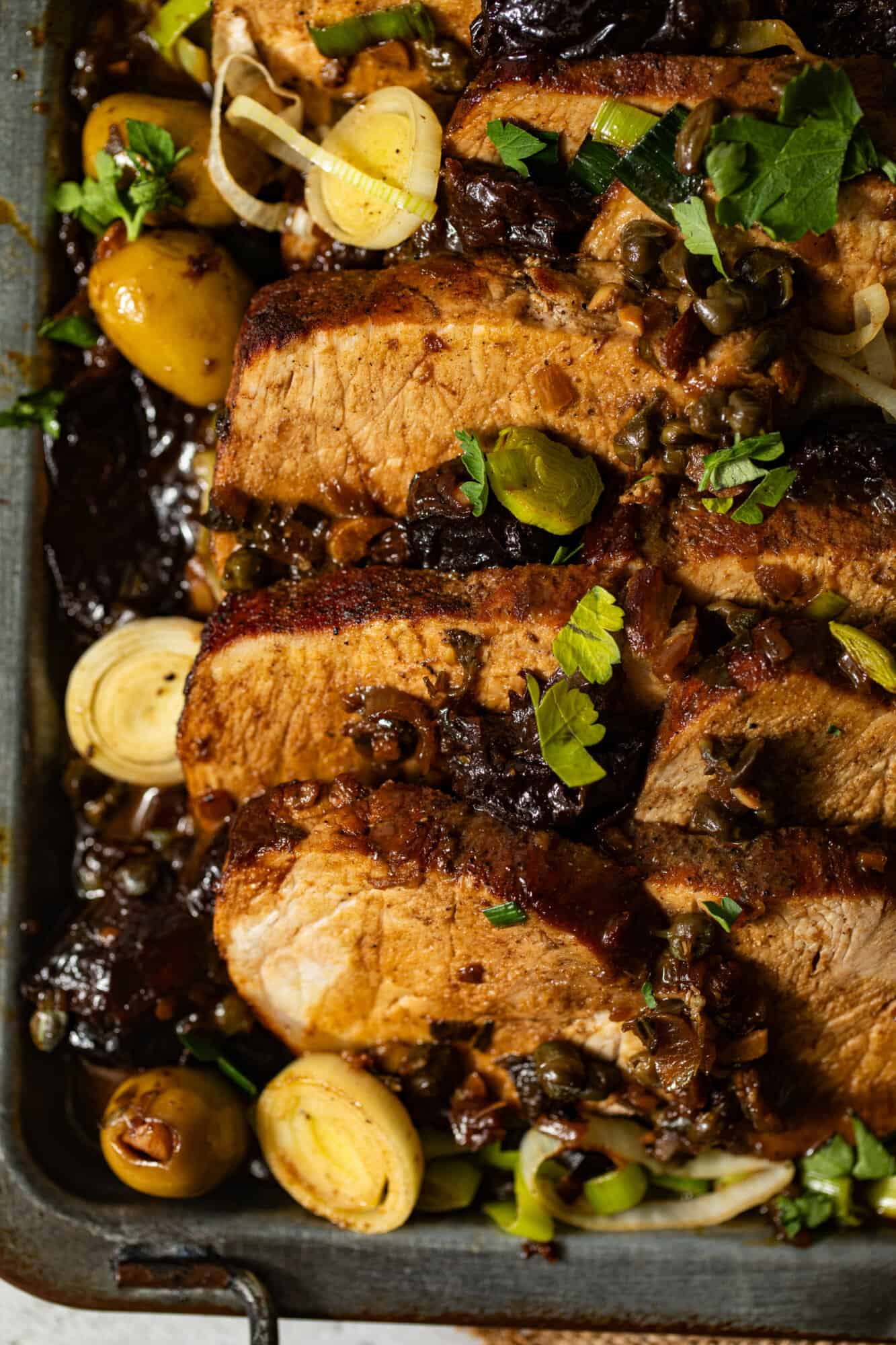
This is literally the perfect meal and goes with anything! I like enjoy it with a little polenta and a side salad. It’s also phenomenal with mashed potatoes, brussels sprouts, and dinner rolls. Yum!
For dessert, make a prune cake if you’re a prune lover like me!
The recipe and blog post was made in partnership with California Prunes! I received compensation and product in exchange for this work. My opinions on their prunes are genuine. Thanks for your continued support!
More Recipes

Main Course
Beef Osso Buco

Main Course
Italian Stuffed Peppers Recipe


Main Course
Mississippi Chicken Recipe
Want more delicious and beautiful recipes? Subscribe to my newsletter to receive the latest seasonal creations as soon as they’re released!
If you make this recipe, please leave a star rating on the recipe card and comment below! You can also tag @BritneyBreaksBread on Instagram and hashtag #britneybreaksbread so I can celebrate your beautiful creations!
Pork Marbella

Equipment
- Braising Pan or 9×13 Baking Pan (pan should be suitable for the stove and oven)
Ingredients
- 1/2 cup Olive Oil
- 1/2 cup Balsamic Vinegar
- 1 cup Prunes
- 1/2 cup Green Olives
- 1/2 cup Capers, (with brine/juice)
- 4 lbs Pork Tenderloin
- 6 cloves Garlic, (diced)
- 2 Shallots, (diced)
- 1 tbsp Fresh Rosemary, (stems removed and chopped)
- 3 tbsp Fresh Oregano, (stems removed and chopped)
- 1/4 cup Brown Sugar
- 1 cup Dry Red Wine
- 4 Bay Leaves
- 2 Leeks, (sliced)
- 2 tbsp Salted Butter
- 1 tbsp Dijon Mustard
- 2 tbsp Sour Cream
- 1 tbsp Fresh Parsley, (diced)
Instructions
- Combine olive oil, balsamic vinegar, prunes, green olives, capers (with the juice/brine) together in a bowl or a large resealable plastic bag. Add the pork tenderloin and submerge in the marinade. Let the meat marinate for at least 2-4 hours, ideally overnight in the refrigerator.
- Preheat the oven to 425 degrees. Let the meat sit at room temperature for 30 minutes. Remove the heat from the marinade (don't throw it out!) and pat dry with paper towels. Season pork with black pepper and kosher salt. Then add a generous amount of extra-virgin olive oil to a dutch oven or large oven safe pan.
- Sear the pork on all sides until golden brown, then lower the heat to medium-low and add the diced garlic cloves, shallots, rosemary, and oregano. Cook until shallots are slightly softened. Remove from heat and pour the reserved marinade on top of the pork along with the brown sugar and pour in red wine. Add bay leaves and ensure they're submerged in the sauce. Toss together, and bring mixture to a boil. Cover with a lid, and cook for 20 minutes, covered, and then 5-10 minutes uncovered, or until the internal temperature reaches 140 degrees F.
- While the pork is cooking, saute the leeks. Add salted or unsalted butter (whatever your preference) to a skillet over medium-high heat and add the leeks. Season with salt and pepper and remove from heat when the leeks begin to soften and brown, about 4-6 minutes.
- Remove pork and strain the juices into a large bowl, removing all of the prunes, olives, shallots etc from the pan. Add the juices back into the pan and bring to a boil to reduce by half. Once reduced, whisk in dijon mustard and remove from heat and add sour cream, whisking until smooth.
- Add the leeks to the bottom of a serving dish, place the pork on top, and pour the sauce, olives, capers, and prunes on top. Garnish with fresh parsley.
Notes
Pro Tips
-
Let it Rest:
- Allow the pork tenderloin to rest for about 5-10 minutes after cooking. This resting period allows the juices to redistribute throughout the meat, ensuring a moist and tender result when you cut into it.
-
Slice Against the Grain:
- When carving the pork tenderloin, slice against the grain. This helps break up the muscle fibers, making each bite more tender.
- Cooking Temperature:
- Use a meat thermometer to monitor the internal temperature of the pork. Cook the pork tenderloin to an internal temperature of 145°F (63°C). Avoid overcooking, as this can lead to dryness.
Nutrition
Nutrition information is automatically calculated, so should only be used as an approximation.



Looks great! Can this be frozen and reheated?
Hi! Yes, you can. Cool the cooked pork completely, then place into an airtight container or freezer safe bag. Storefor up to 3 months. When you’re ready to thaw, place into the refrigerator and let it defrost overnight. Once completely thawed, reheat it in the oven along with all of the juices at 350°F until it is warm all the way through. Enjoy!
What kind of dry red wine do you suggest?
Hi! I recommend using Cab Sav or Merlot
I think this recipe is using a pork loin roast rather than the tenderloin. These are different. The tenderloin is usually less than a pound and tapered at one end. The pictures show a pork loin roast. Could you please clarify?
Hi Shannon, confirming that this recipe calls for pork tenderloin – the pictures show a very large tenderloin that I was able to find at Sam’s Club. The loin roast is best cooked low and slow, this recipe calls for a fairly quick cook time comparatively as the loin roast would not be able to withstand such heat and would dry out. I hope that this helps.