

This post may contain affiliate links. Please see our disclosure policy.
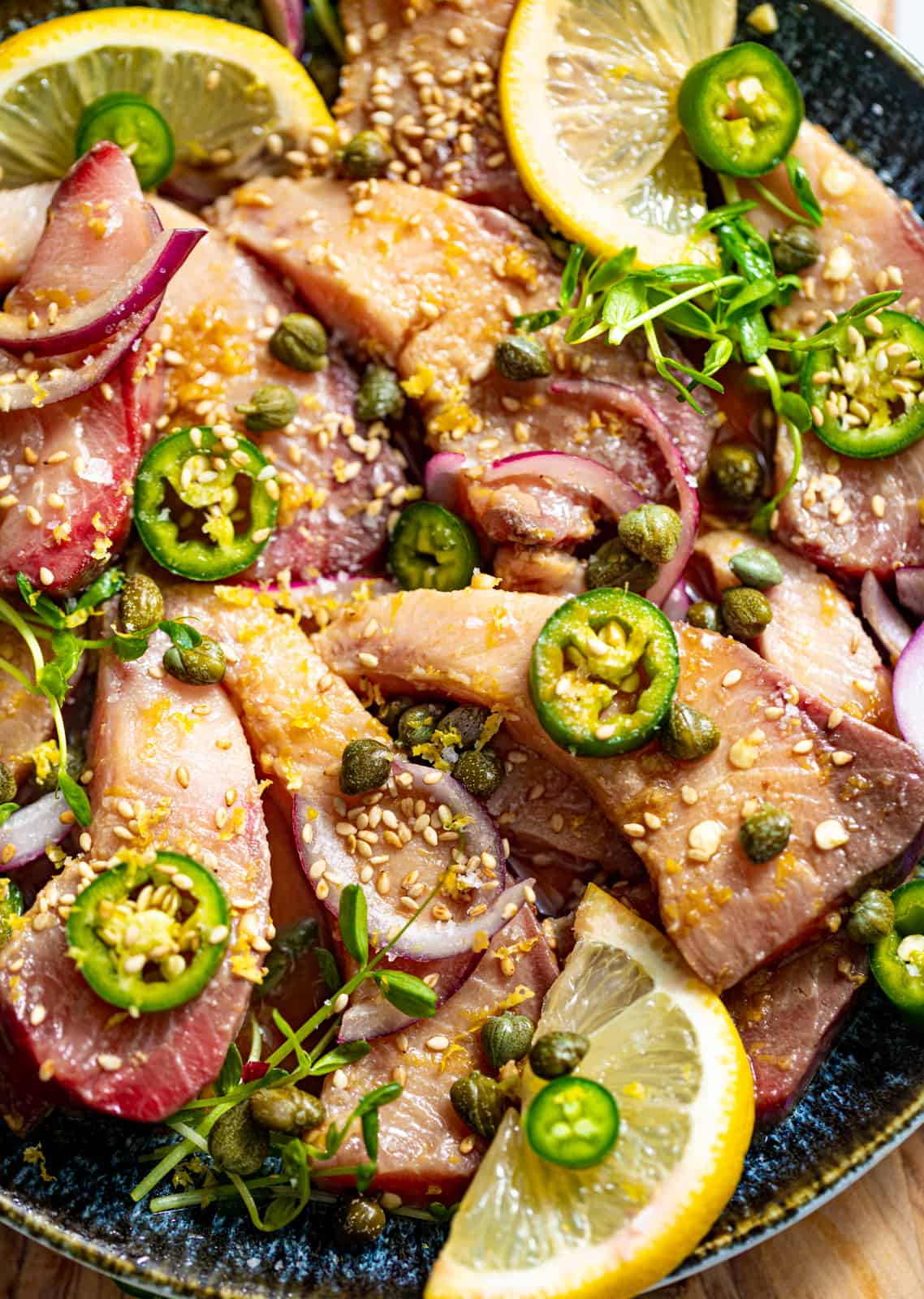
Hamachi Crudo is an easy and impressive appetizer that features buttery yellowtail in a garlic and citrus crudo sauce! It’s topped with serrano peppers, sesame seeds, red onions, and capers for a delicious combination of bright and umami flavors. With just three simple steps, you can create this recipe that is sure to be the star of the show. Save this crudo recipe for dinner parties, brunch, or date night!
For more seafood recipes, try this Creamy Salmon Pasta or this Seafood Boil!
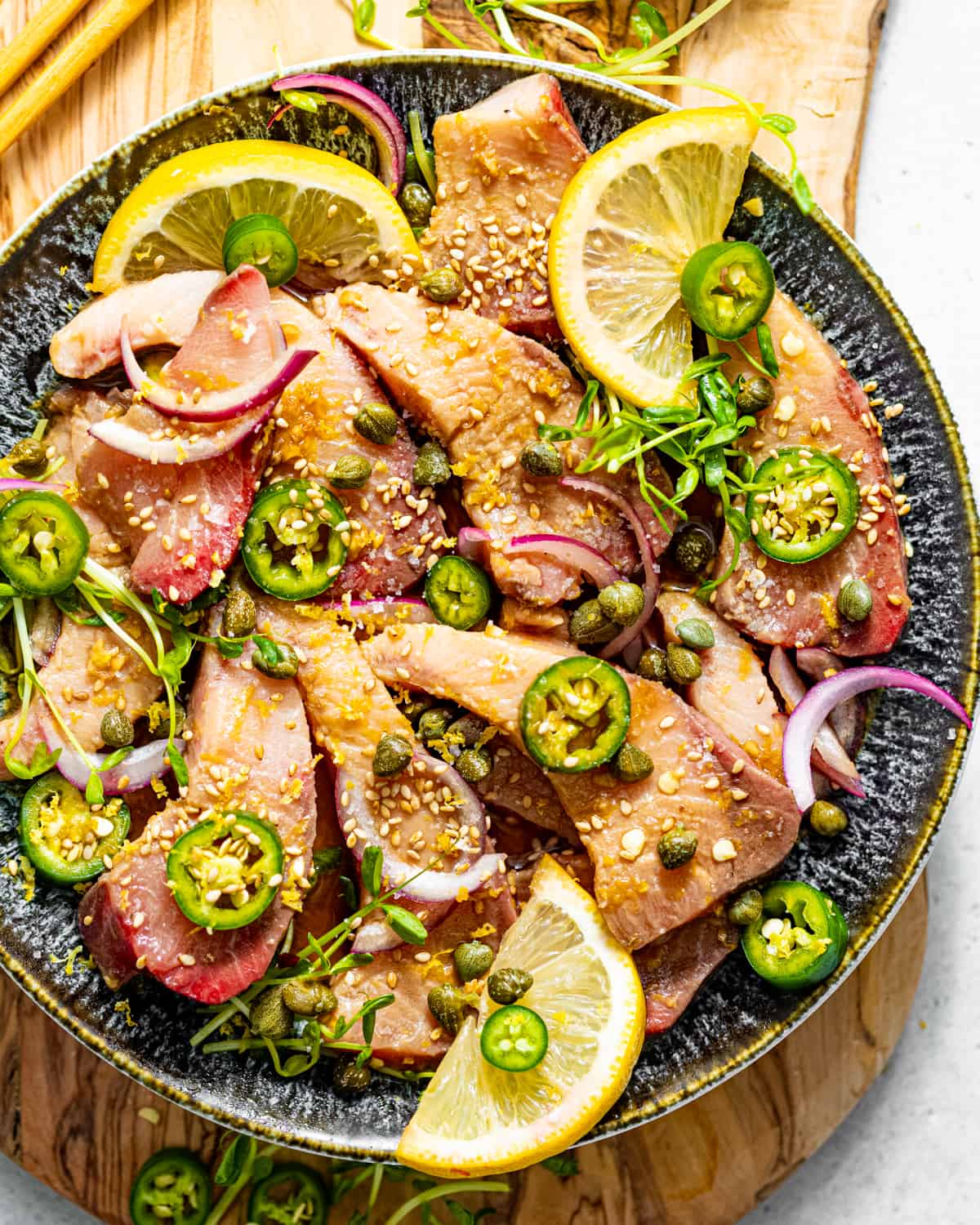
This hamachi crudo recipe is bursting with flavor! It’s a Japanese inspired appetizer, also known as hamachi carpaccio, that is served raw with a wide array of toppings like red onion, peppers, lemons, and a crudo dressing for added flavor.
Hamachi is a sushi-grade yellowtail fish that has a buttery tender texture that melts in your mouth at first bite. I could honestly eat raw hamachi by itself because of its rich flavor, however, the citrus crudo sauce and delectable toppings make this already delicious fish even better.
If you’re nervous to try a raw fish dish at home, fret not! I’ve provided a ton of tips to make this marvelous dish at home, easily, without any fuss.
Table of Contents
What is hamachi crudo?
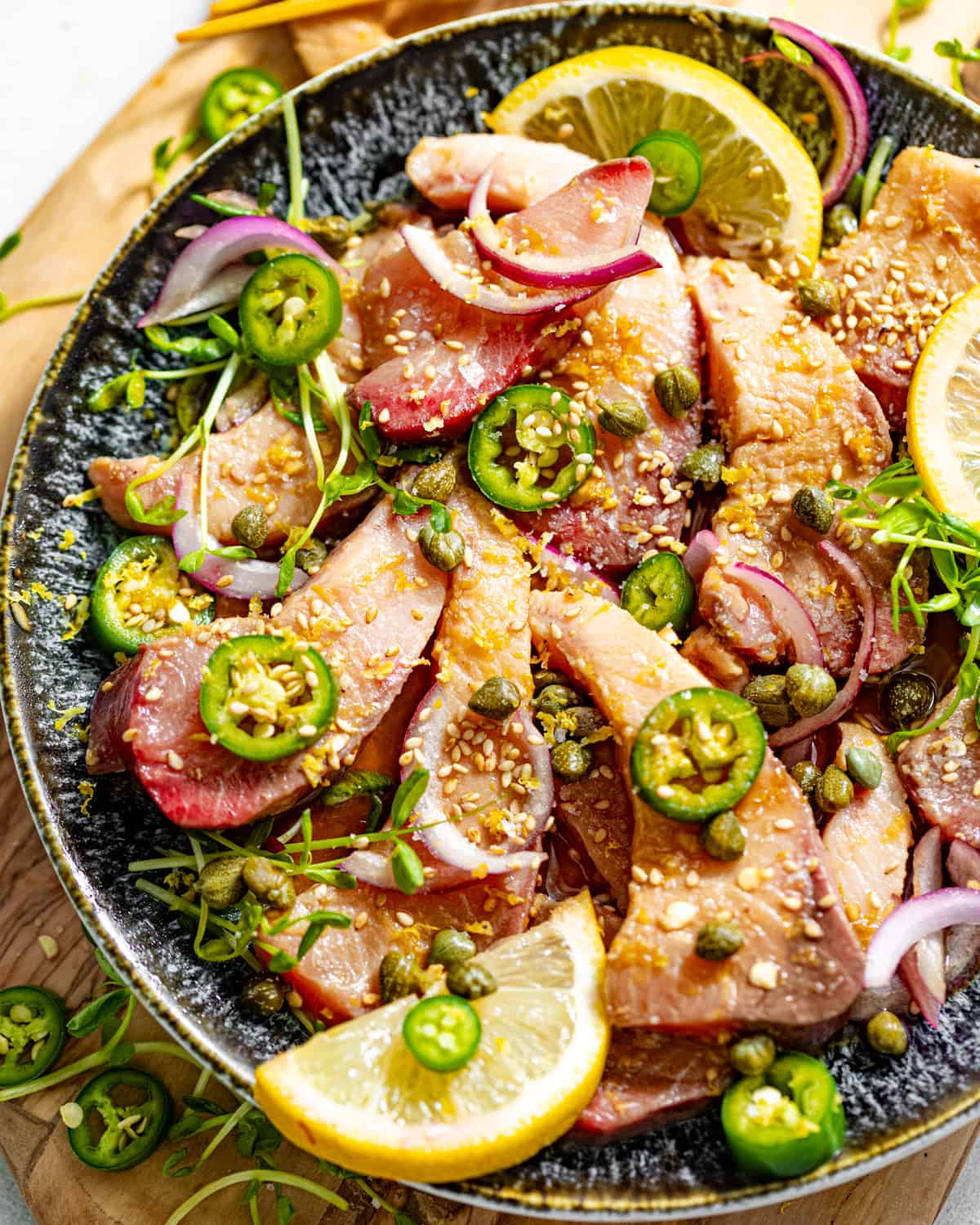
Hamachi crudo is a Japanese appetizer consisting of raw yellowtail fish. This dish is served thinly sliced with a citrus or soy-based sauce, along with a variety of complementary toppings.
Hamachi, also known as Japanese amberjack or yellowtail fish, is a fish found in the pacific ocean and is a Japanese delicacy. Crudo simply means “raw” and mostly applies to a style of cooking, similar to carpaccio, when preparing seafood or beef.
Where to buy Hamachi (Yellowtail)
Fish markets, Asian grocery stores, and online retailers typically sell yellowtail. I didn’t have much luck finding quality yellowtail at my local grocer so I purchased the hamachi used in this recipe at Oceanside Seafood.
Should I buy Farm raised or Wild Caught?
There are pros and cons to each. Farm raised is most easily to source and is what you’ll typically find at sushi restaurants. It tends to be a be a bit higher in fat which gives it a rich texture and buttery flavor. Because of this, farm raised hamachi is great for sashimi and crudo recipes.
Wild caught hamachi tends to be less fatty and has a firmer texture, making it a more lean protein. In flavor, it has a more savory flavor whereas farm raised tends to be on the milder sour side.
Ingredients and Substitutions

See the recipe card for full information on ingredients and quantities.
- Hamachi – be sure to find a high quality raw sushi-grade fish. It’s important that the hamachi is sushi grade as this means it’s meant for raw consumption. If you have any leftovers, you can make a yellowtail version my fave poke nachos.
- Ponzu Sauce – ponzu is essentially soy sauce and a citrus juice, like yuzu juice or lemon juice. Since I had difficulty finding yuzu, I decided to use ponzu for added citrus flavor.
- Soy Sauce – use a high quality soy sauce if you can find it at the grocery store. Yamaroku Soy Sauce is my absolute favorite, but Kikkoman works too!
- Lemon Juice – lemon juice pairs exceptionally well with seafood. If you don’t have any fresh lemons on hand, you can also use lime juice instead.
- Sesame Oil – sesame adds a mild flavor to the crudo sauce that mellows out but also brings everything together. It is also possible to substitute sesame oil for extra virgin olive oil (exact amounts are provided in the recipe card).
- Garlic – use one garlic clove diced as finely as possible. This adds a sweet, fragrant flavor to the crudo sauce.
Additional Toppings
What I love about this dish is that you can easily customize it to your liking! Here’s a list of topping you can use:
- Red Onion
- Sprouts
- Lemon Zest
- Serrano Peppers
- Capers
- Sesame Seeds
- Cilantro
- Watermelon Radishes
- Pine Nuts
Pro tip: Top with a little flaky sea salt too for an elegant touch!
Expert Tips
- Be sure to buy sushi-grade hamachi! This type of raw yellowtail fish is meant to be eaten fresh. Sushi-grade fish is caught and prepared immediately upon capture and flash frozen to prevent bacteria from growing.
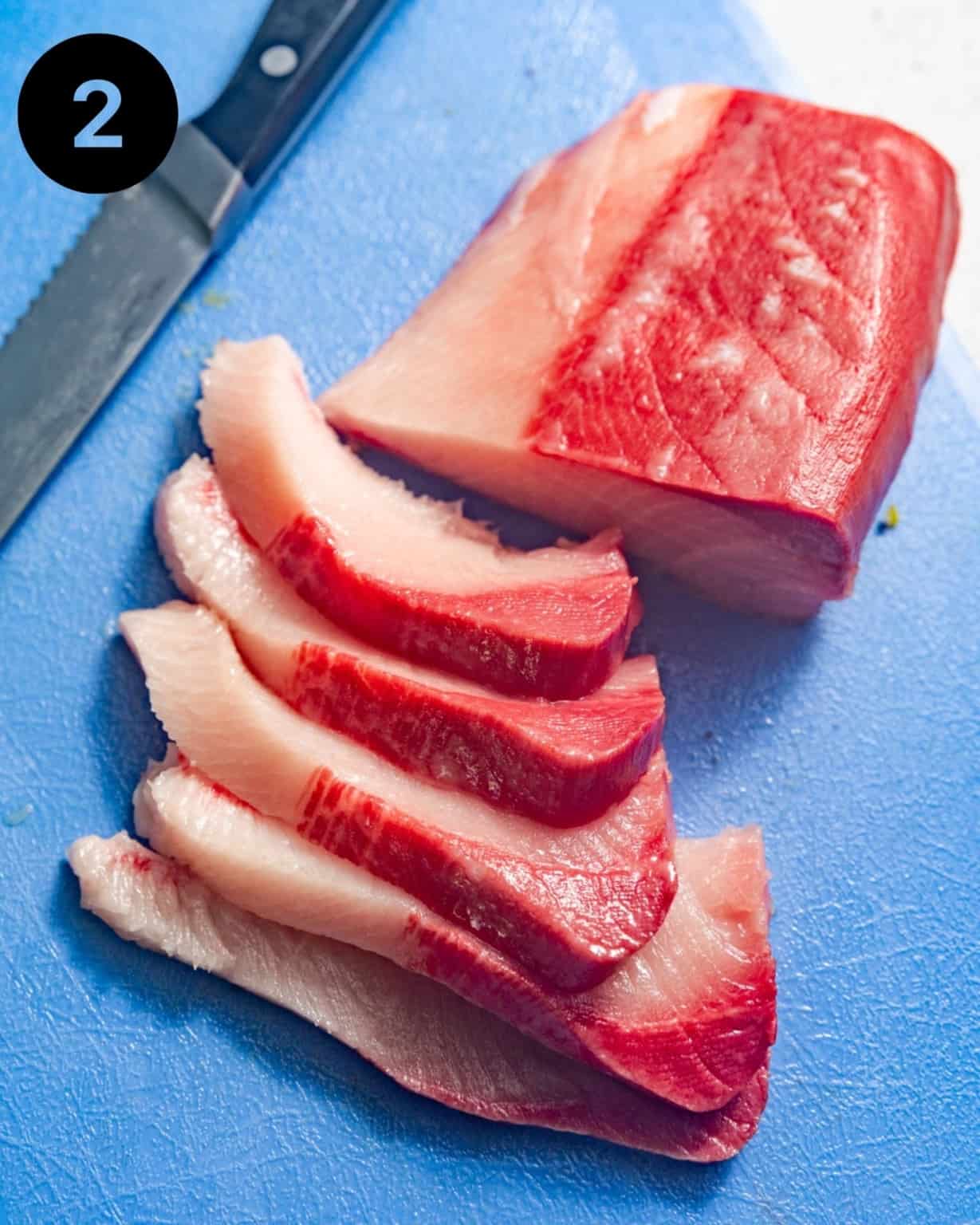
- Freeze the hamachi for 15 minutes prior to slicing! This gives the fish a firm texture, making it easier to slice.
- Use the highest quality fish you can find. Since you’re eating it raw, you want a sashimi-grade fish that’s fresh,
- Use a sharp knife! For a good cut, use the sharpest knife that you have on hand. Avoid using a serrated knife as this will snag and potentially break the fish as opposed to cutting it.
- Yellowtail crudo should be consumed upon preparation. Do not allow the fish to sit at room temperature any longer than 2 hours.
How to make Hamachi Crudo
- Place hamachi in the freezer for 20 minutes so that it’s easier to slice.
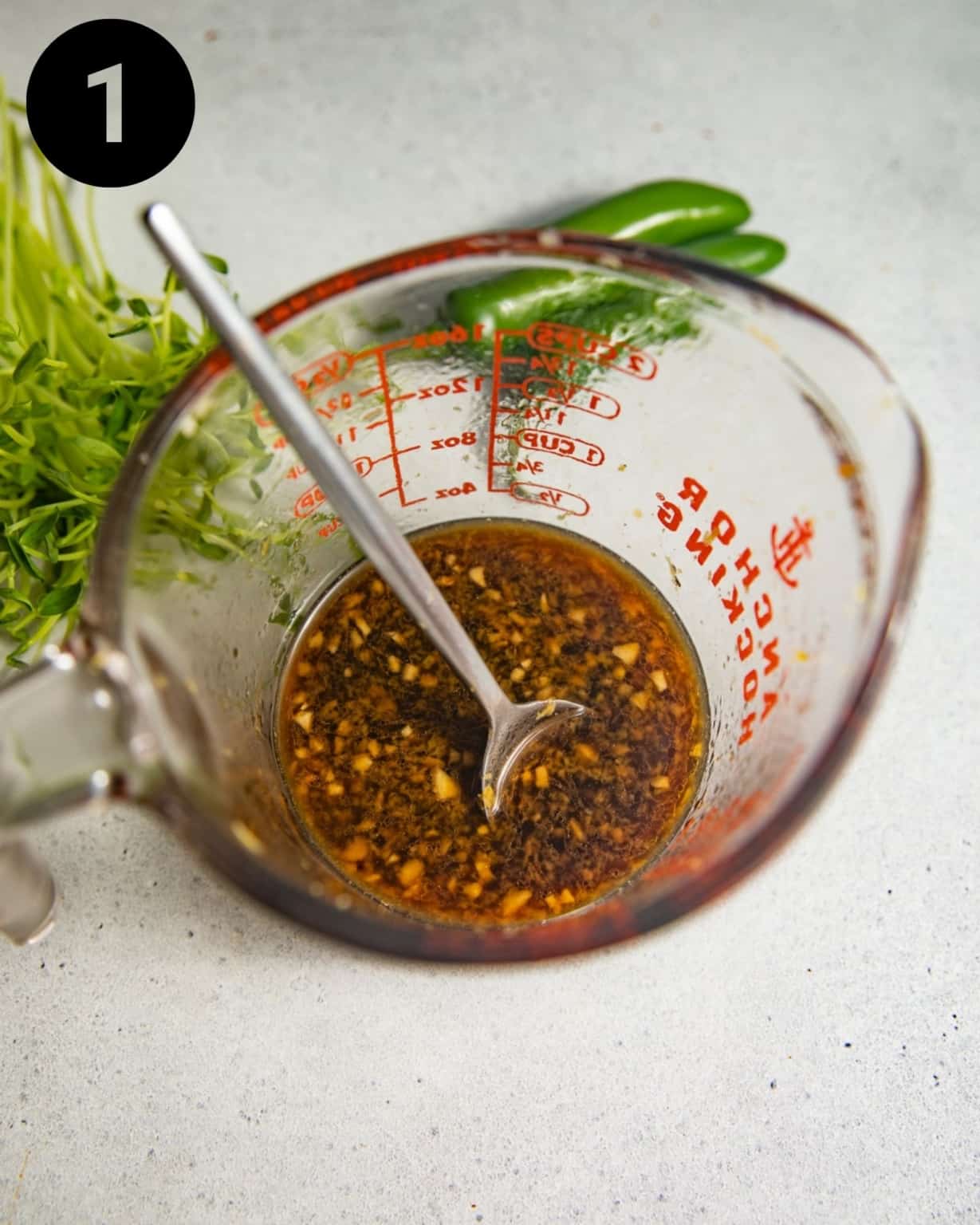
Make the Crudo Sauce
- Combine lemon juice, ponzu sauce, soy sauce, and diced garlic in a small bowl and mix together. (Image #1)
Thinly Slice Hamachi
- Cut hamachi into thin slices with a sharp knife, about 1/4 inch thick, and arrange on a plate. Pour crudo sauce on top and garnish with sliced serrano peppers, red onion, capers, and sesame seeds. (Image #2)
Assemble
- Pour crudo sauce on top and garnish with sliced serrano peppers, red onion, capers, and sesame seeds.
- Finish with flaky salt and lemon zest.
Drink and Wine Pairings
Since hamachi is a fatty fish, it pairs exceptionally well with citrus forward white wines like Sauvignon Blanc and White Wine Sangria or an oaky Chardonnay. For fruity cocktails, try these green tea shots or vodka gimlet for a sweet pairing with your hamachi crudo.
Storage
If using fresh hamachi, it is important to consume within 24 hours. Hamachi can be frozen for up to 3 months in an airtight container.
As mentioned earlier, it is important to consume hamachi 2 hours from the time it is prepared and is best served fresh. I do not recommend storing leftovers in the refrigerator for any longer than 24 hours so long as it has not been at room temperature any longer than 2 hours.
Recipe FAQs
Sushi grade hamachi is safe to eat raw as it is prepared according to specific guidelines that prevent foodborne illness. Of note, if you have a weakened immune system, you should not consume raw fish.
Japanese sashimi and crudo dishes are quite similar in that they are both thinly sliced raw fish served without rice. However, crudo recipes tend to have more toppings whereas sashimi is simply raw fish served just soy sauce or wasabi.
Hamachi yellowtail has a buttery sweet flavor and a soft melt in your mouth texture.
Hamachi is a sushi grade yellowtail that is a staple in Japanese cuisine.
More Seafood Recipes
Want more delicious and beautiful recipes? Subscribe to my newsletter to receive the latest seasonal creations as soon as they’re released!
If you make this recipe, please leave a star rating on the recipe card and comment below! You can also tag @BritneyBreaksBread on Instagram and hashtag #britneybreaksbread so I can celebrate your beautiful creations!
Hamachi Crudo

Equipment
- Cutting board
- Sharp Knife
Ingredients
- 1/2 lb Sushi Grade Hamachi
Crudo Sauce
- 2 tbsp Lemon Juice
- 2 tbsp Soy Sauce
- 2 tbsp Ponzu
- 1/2 tsp Sesame Oil
- 1 clove Garlic, (diced)
Toppings
- 1/2 Red Onion, (thinly sliced)
- 2 tbsps Capers
- 2 Serrano Peppers, (sliced)
- 2 tsp Sesame Seeds
- 2 tsp Lemon Zest
- Flaky Sea Salt , (optional)
Instructions
- Place hamachi in the freezer for 20 minutes so that it's easier to slice.
- Make the Crudo Sauce. Combine lemon juice, ponzu sauce, soy sauce, sesame oil, and diced garlic in a small bowl and mix together.
- Cut hamachi into thin slices with a sharp knife, about 1/4 inch thick, and arrange on a plate.
- Pour crudo sauce on top and garnish with sliced red onion, capers, serrano peppers, and sesame seeds.
- Finish with flaky salt and lemon zest.
Notes
- Be sure to buy sushi-grade hamachi! This type of raw yellowtail fish is meant to be eaten fresh. Sushi-grade fish is caught and prepared immediately upon capture and flash frozen to prevent bacteria from growing.
- Freeze the hamachi for 15 minutes prior to slicing! This gives the fish a firm texture, making it easier to slice.
- Use the highest quality fish you can find. Since you’re eating it raw, you want a sashimi-grade fish that’s fresh,
- Use a sharp knife! For a good cut, use the sharpest knife that you have on hand. Avoid using a serrated knife as this will snag and potentially break the fish as opposed to cutting it.
- Yellowtail crudo should be consumed upon preparation. Do not allow the fish to sit at room temperature any longer than 2 hours.
Nutrition
Nutrition information is automatically calculated, so should only be used as an approximation.



Thank you Brittany for posting your lovely recipe! Lemon juice and peels make it in the recipe! I usually put half the amount of sauce and toppings (compared to the amount of yellowtail) which work just fine. And I also add yuzu pepper paste and wasabi on the side for me and my guests. We absolutely love it! This is a Japanese person approved recipe!
So happy that you enjoyed and approved this recipe! Makes my day!
This was my first time tasting hamachi crudo and let’s just say I was totally impressed! The flavors work so well together, thank you!!
This was my first time making hamachi crudo and won’t be the last. Your recipe is so easy to follow and delicious!
Hey Britney! Just wanted to say I tried your Hamachi Crudo recipe and it was a total hit! The flavors were so fresh and vibrant – I’m seriously obsessed. Keep rocking those amazing recipes, girl!