This post may contain affiliate links. Please see our disclosure policy.
These Sweet Potato Dinner Rolls are about to give your regular dinner rolls some serious competition! They’re soft and fluffy, slightly sweet, and have just a touch of warm spice that brings out that rich sweet potato flavor. When you pull apart a warm roll and spread a little cinnamon honey butter right in the middle, it’s like heaven on a plate!
If you love baking with sweet potatoes as much as I do, you’ve gotta try my Sweet Potato Cinnamon Rolls, Sweet Potato Cornbread, and Sweet Potato Biscuits next!

If there’s one thing I’m gonna do when sweet potato season rolls around, it’s find another way to bake with them. Between my sweet potato pound cake, brown butter sweet potato pie, and these fluffy little beauties, sweet potatoes stay BUSY in my kitchen! For these rolls, I roast the sweet potatoes to bring out their natural sweetness, then work them into a rich, buttery yeast dough. After baking, we make a homemade honey butter, similar to the one in my cornbread biscuits, and it takes it completely over the top!
Sweet Potato Dinner Rolls Recipe Overview
- ⭐ Difficulty: Intermediate, beginner-friendly with a stand mixer
- ⏱️ Prep Time: 30 minutes, using prepared sweet potato purée
- 🍠 Rise Time: 1½–2 hours
- 🍞 Bake Time: 25-28 minutes
- 🕒 Total Time: 3½ hours
- 👨👩👧👦 Yield: 16 dinner rolls
- 🌿 Made With: Roasted sweet potatoes, bread flour, whole milk, butter, eggs, sugar, yeast, nutmeg, and allspice.
- ❤️ Why These Rolls Are The Best: These homemade sweet potato rolls are soft, buttery, lightly sweet, and perfect for pulling apart while they’re still warm. The roasted sweet potatoes bring extra moisture and a beautiful golden-orange color.
Table of contents
Key Ingredients
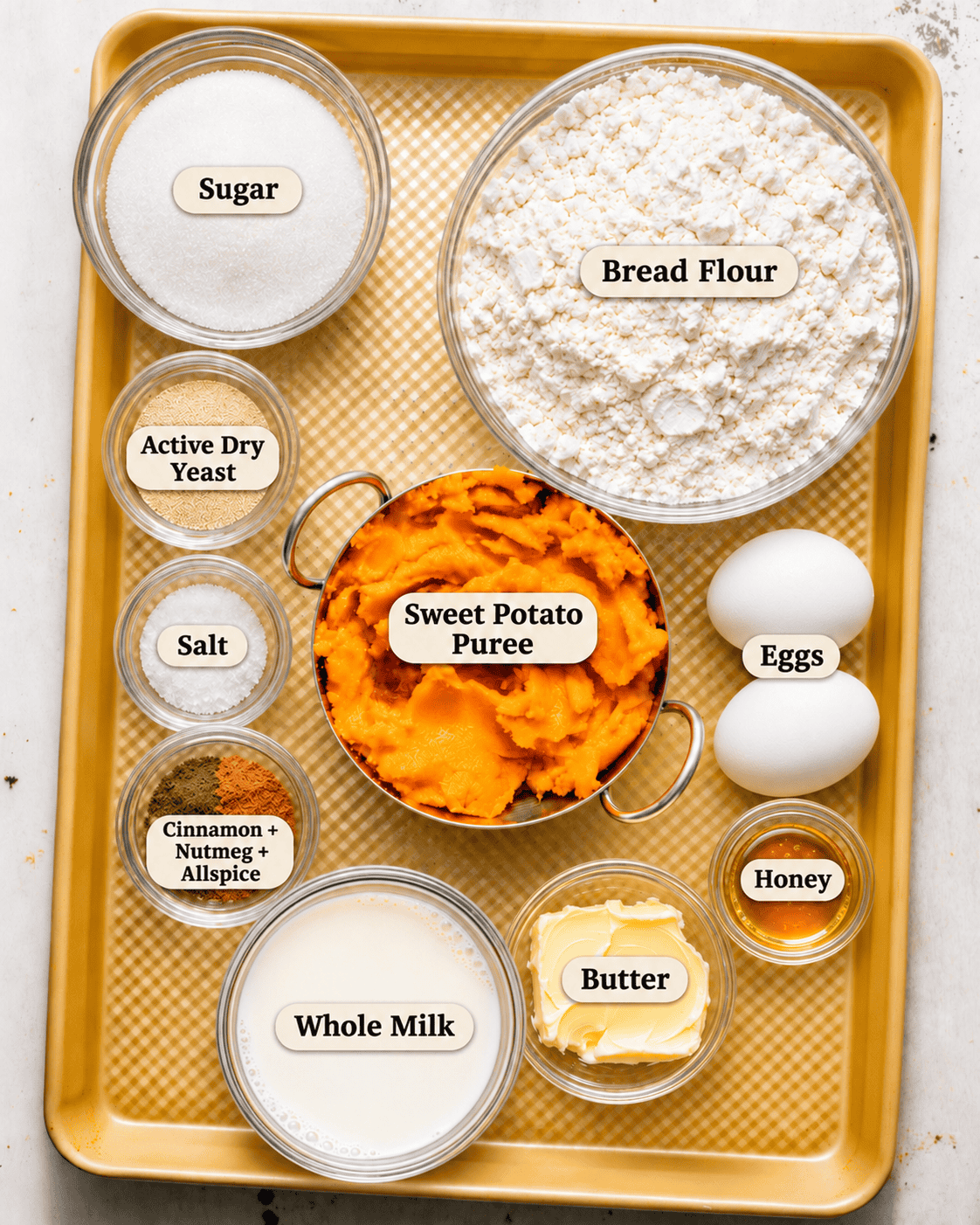
The full ingredient list and measurements are in the recipe card below.
- Roasted sweet potato purée: The star of the show! I roast my sweet potatoes to develop their natural sweetness without adding extra water. You’ll need 1 cup (240 g) of smooth, cooled purée. The sweet potatoes add moisture and help create a soft, tender crumb.
- Bread flour: My go-to for these rolls! Bread flour has more protein than all-purpose flour, which helps develop the gluten structure needed to support a soft, fluffy rise, especially with sweet potato purée in the dough.
- Active dry yeast: We’re using 1 tablespoon to help this enriched dough rise. Proofing it in warm milk with a little sugar lets you see that the yeast is active before mixing everything together.
- Salted butter: Six tablespoons of softened butter make these rolls rich and buttery. Adding the butter after the dough comes together helps the flour develop structure before the fat is fully incorporated.
How to Roast Sweet Potatoes
- Prep the sweet potatoes. Preheat your oven to 425°F. Rinse and dry the sweet potatoes, then pierce each one several times with a fork.
- Roast until tender. Place on a parchment-lined baking sheet and roast for approximately 40–60 minutes, depending on their size. They’re ready when the skins look wrinkled and a knife slides easily through the centers.
- Scoop and purée. Let cool, remove the skins, and mash or blend the flesh until smooth. Measure out 1 cup (240 g) and allow it to cool before mixing the dough.
Britney’s Tip: Roast the sweet potatoes a day or two ahead and store the purée in the refrigerator. It makes baking homemade rolls during the holidays a whole lot easier!
How to Make Sweet Potato Rolls
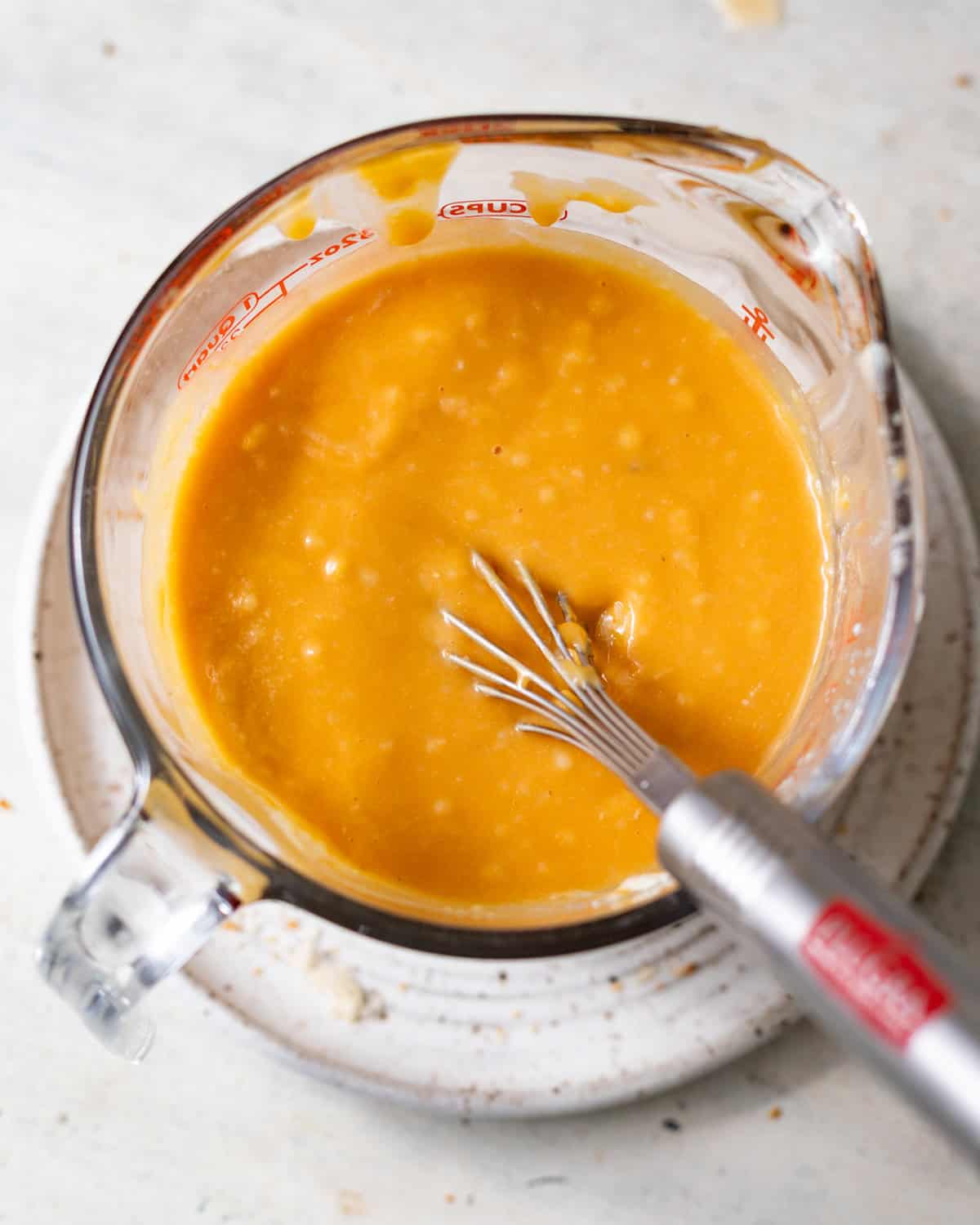
Step 1: Activate the yeast. Warm the whole milk to approximately 105–110°F, then stir in the active dry yeast and 1 tablespoon of sugar. Let it sit for 5–10 minutes, until the mixture looks foamy, then whisk in the sweet potatoes and eggs and mix until smooth. Britney’s Tip: If the milk is too hot, it can damage the yeast. Warm to the touch is what we’re looking for, not steaming!
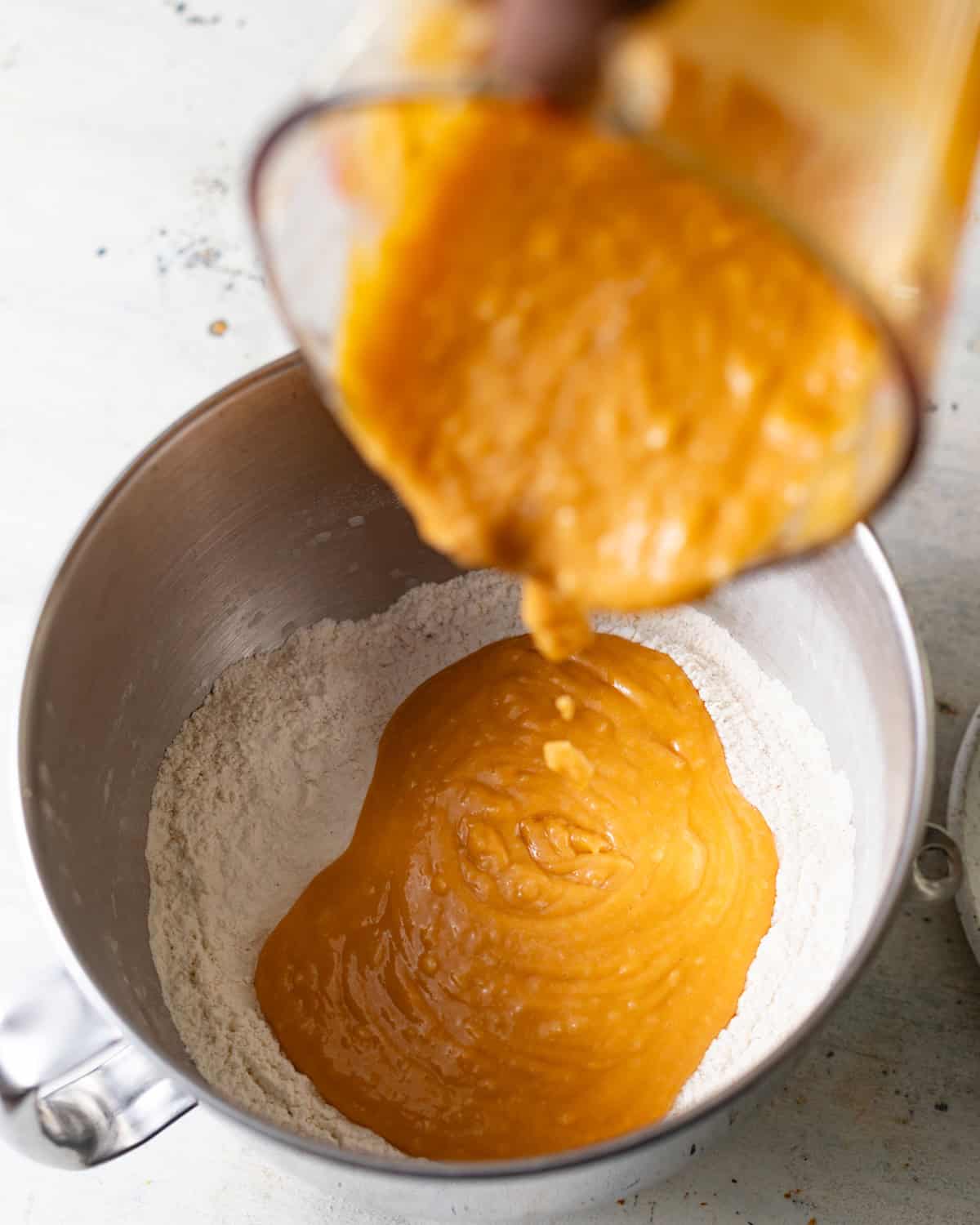
Step 2: Mix and knead the dough. In a stand mixer fitted with a dough hook, add the remaining sugar, bread flour, nutmeg, allspice, and salt. Pour in the sweet potato/yeast mixture and mix until a shaggy dough forms. It may look dry at first but it’ll come together. Once it forms a ball, begin adding softened butter, 1 tbsp at a time.
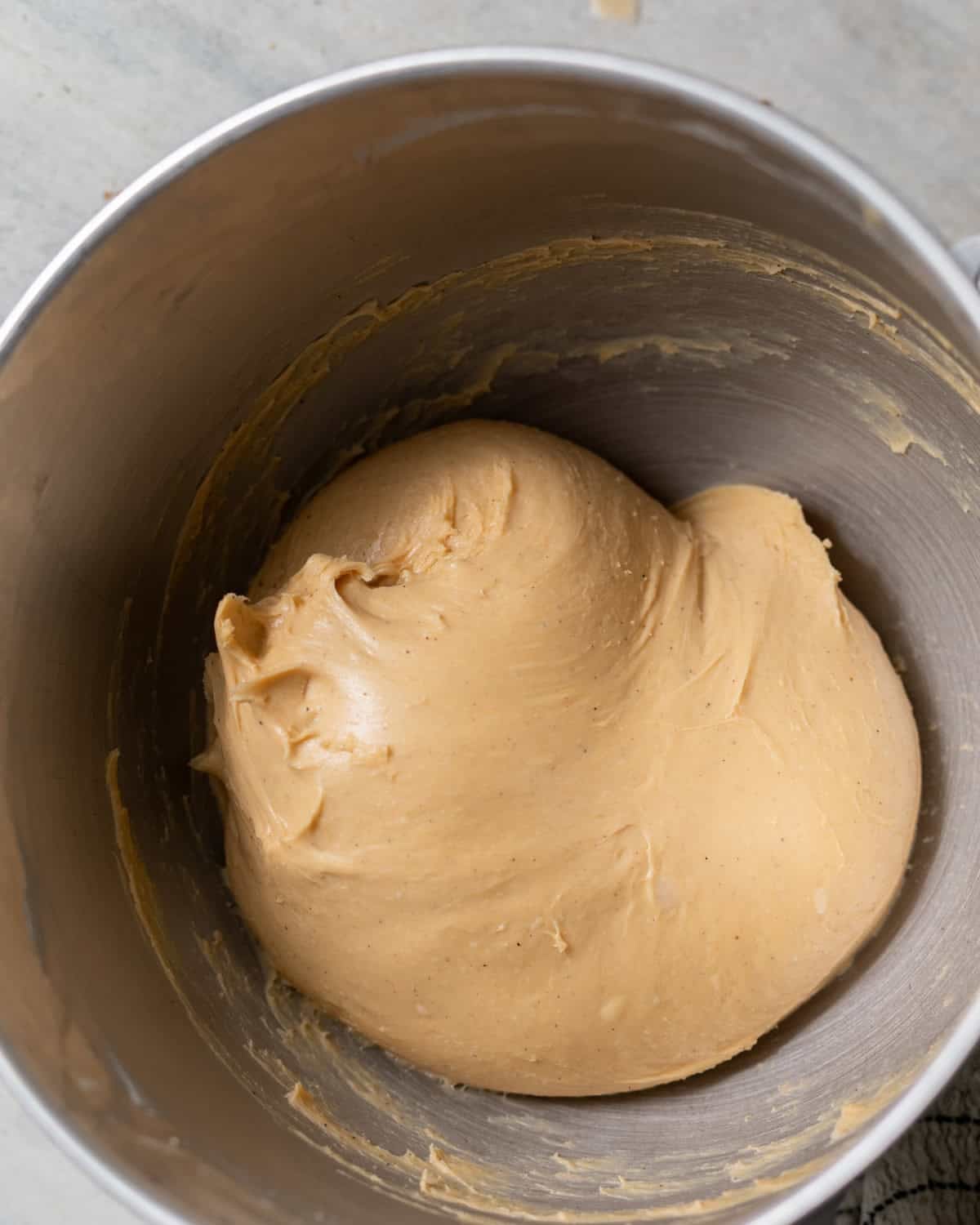
Step 3: Knead until the dough is elastic and smooth. Once all of the butter is added, turn mixer to medium high speed and knead until the dough is smooth and no longer sticks to the sides of the bowl. It may pool at the bottom for a bit, but will come together and form a cohesive ball after 7-10 minutes. It may be tempting to add more flour – don’t do it!
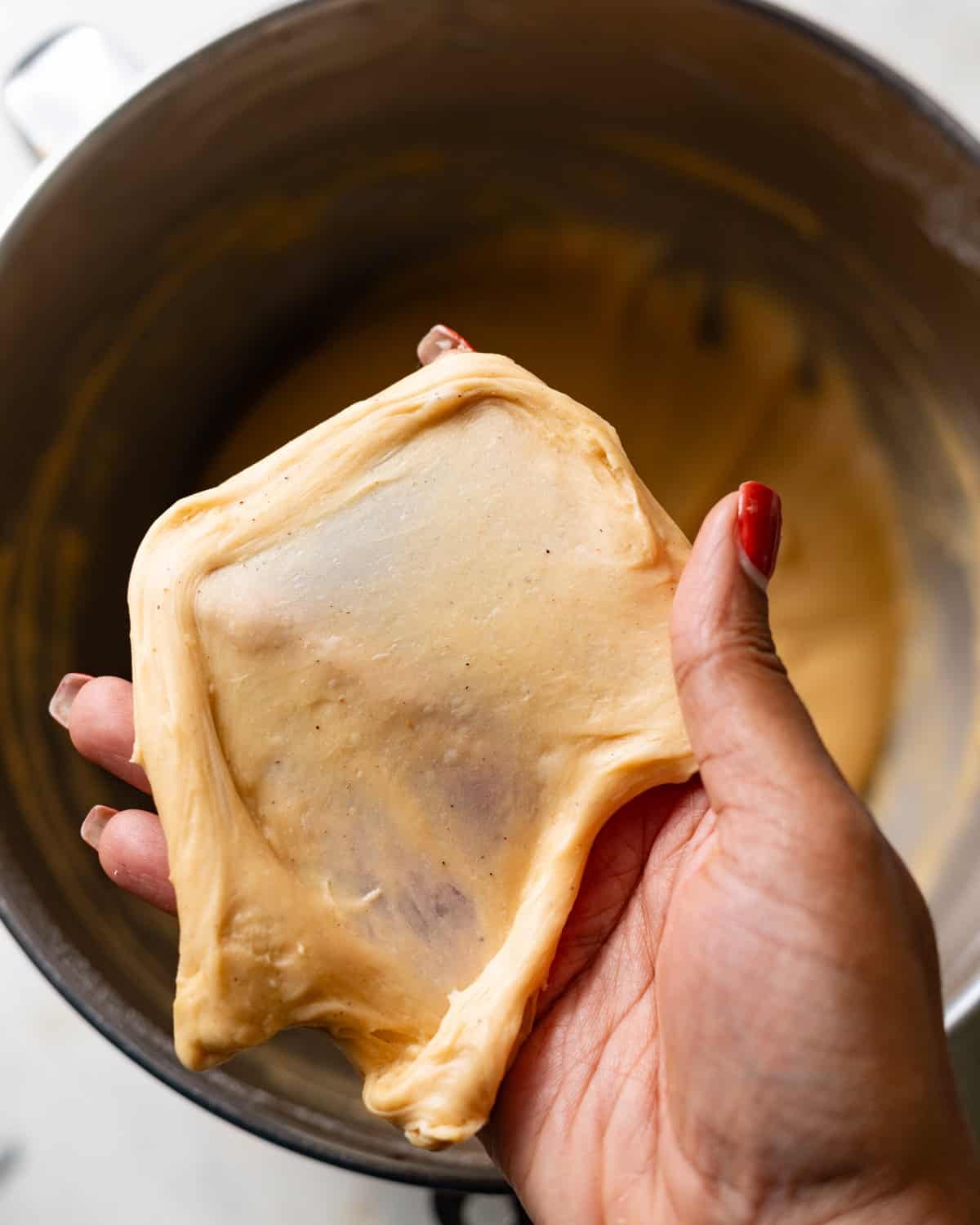
Step 4: Perform the windowpane test. Once the dough is smooth and elastic, pinch off a small piece and gently stretch it between your fingers. The dough should stretch into a thin, almost translucent sheet without tearing easily, allowing light to pass through it. This means the gluten has developed enough to give your rolls a soft, fluffy texture! Britney’s Tip: If the dough tears immediately, knead for another 2–3 minutes, then test again.
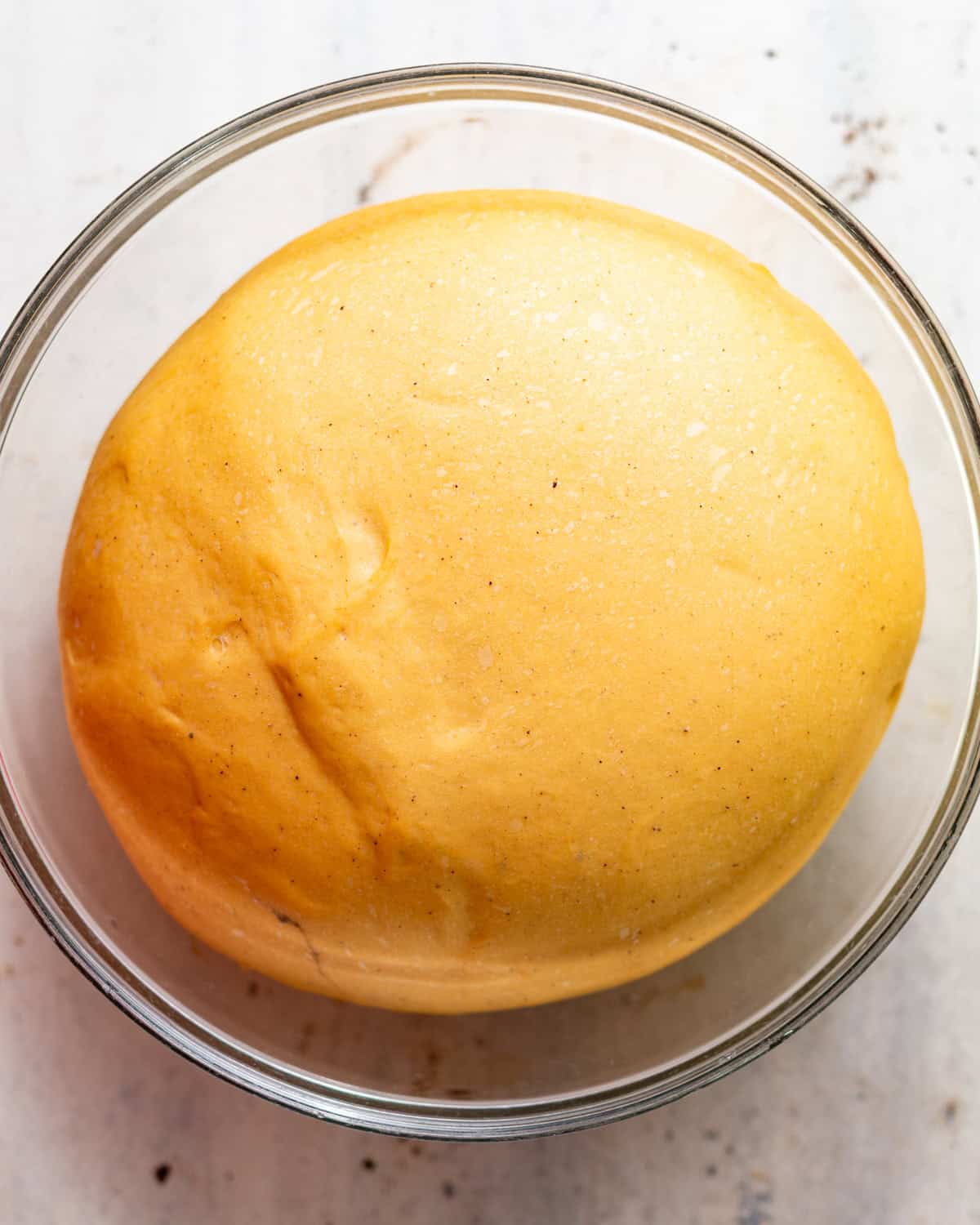
Step 5: Let the dough rise. Transfer the dough to a lightly greased bowl, cover, and let rise in a warm, draft-free spot for approximately 60–90 minutes, or until roughly doubled in size.

Step 6: Shape the rolls and let rise again. Gently deflate the dough and divide it into 16 equal portions, about 80g each. Shape each piece into a smooth ball, tucking the edges underneath to create surface tension. Arrange the rolls in a greased 9×13-inch baking pan, cover, and let rise for approximately 40–60 minutes, until noticeably puffy and beginning to touch. They’re properly proofed when gently pressed with a floured fingertip and the indentation slowly springs back.
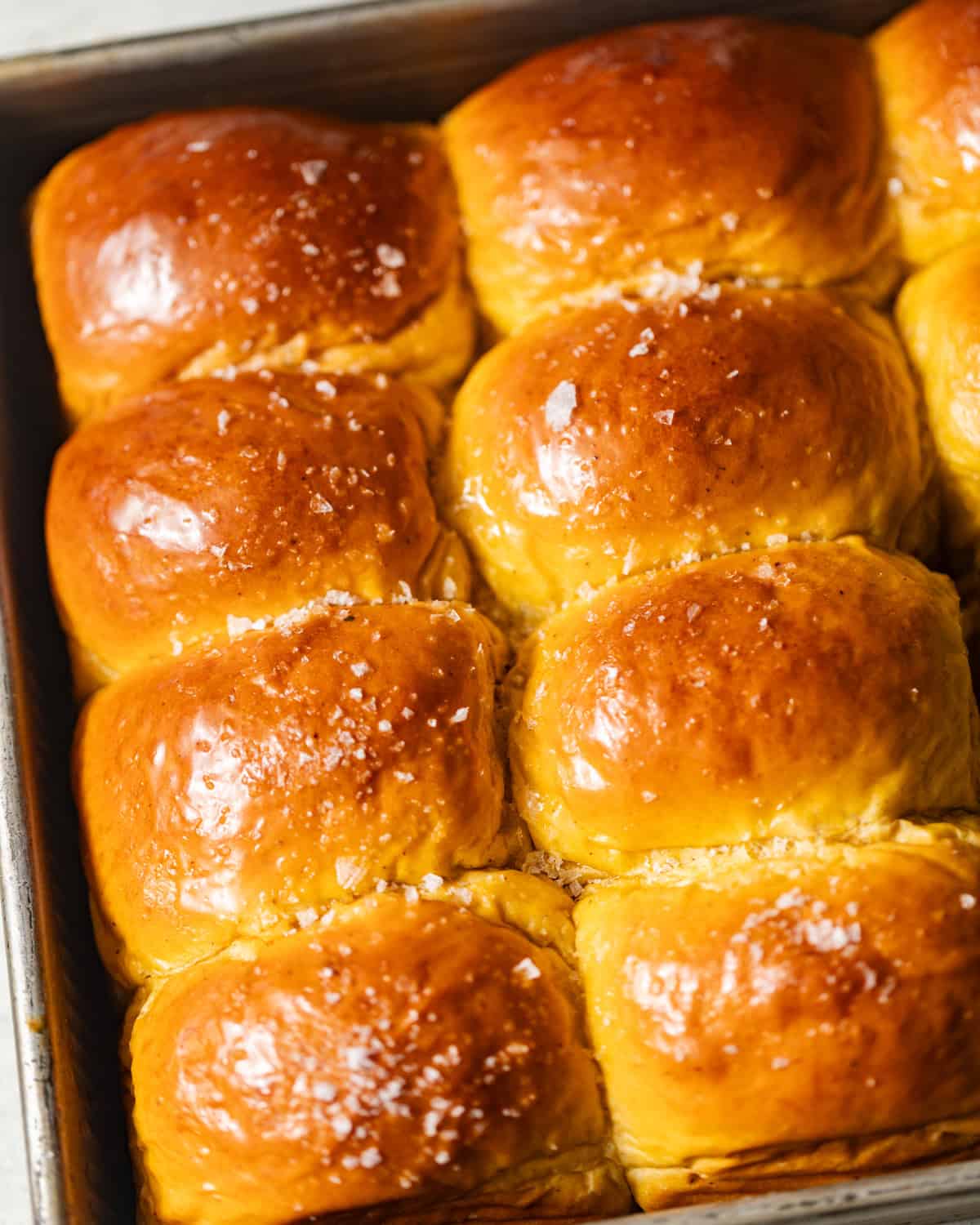
Step 7: Brush and bake. Preheat the oven to 350°F. Whisk the egg yolk with a little water, then gently brush over the tops of the risen rolls. Bake for 25–28 minutes, until beautifully golden brown and the center rolls reach approximately 190°F.
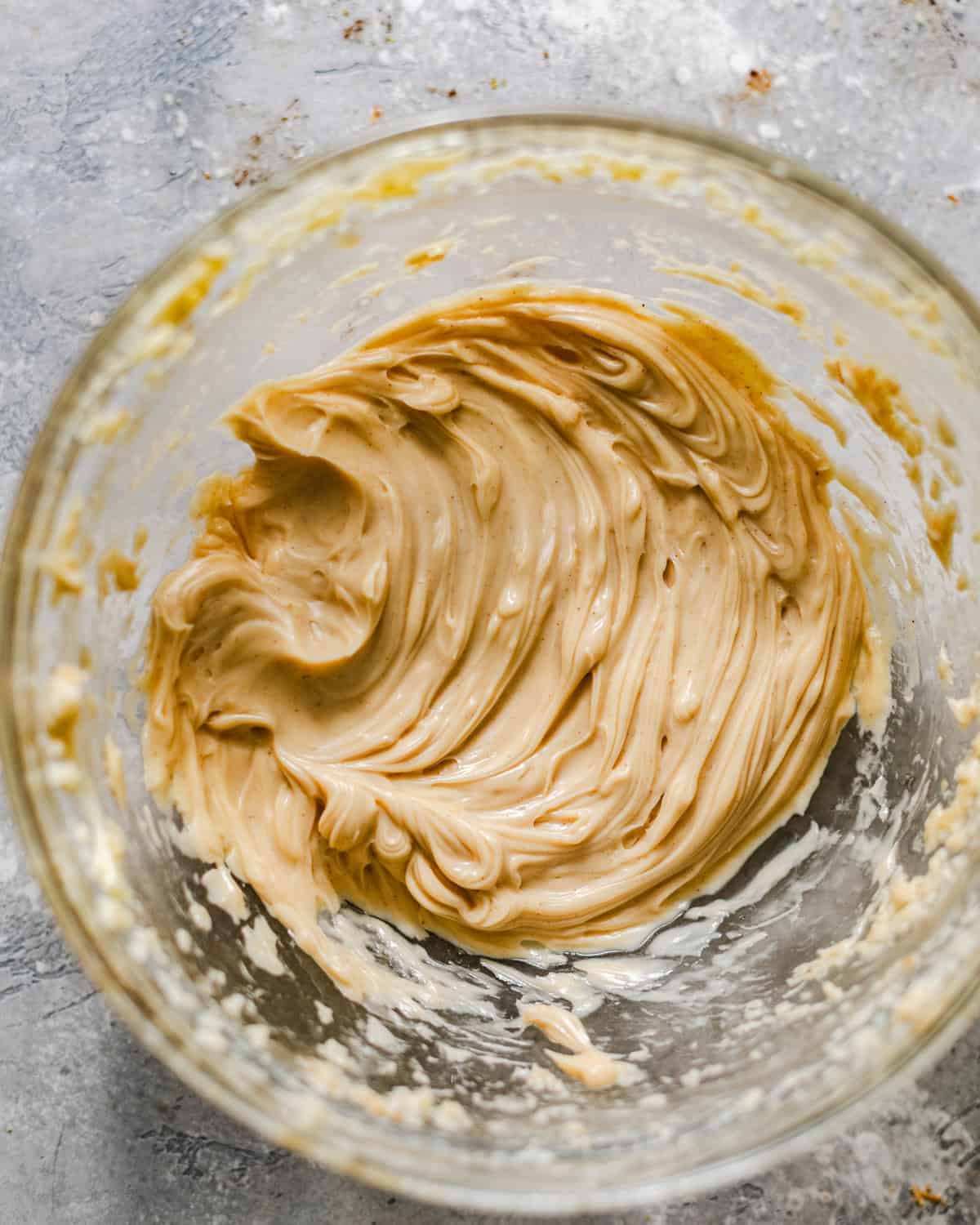
Step 8: Make the cinnamon honey butter. While the rolls are cooling, add softened butter, honey, and ground cinnamon to a small mixing bowl. Using a hand mixer or a spatula, beat until smooth, creamy, and well combined. Taste and adjust the honey or cinnamon to your liking. Spread generously over the warm sweet potato rolls and enjoy!
Britney’s Pro Tips
- Use cooled sweet potato purée. Hot purée can warm the dough too much and make fermentation harder to control. Let it cool before mixing.
- Add the butter gradually. Softened butter incorporates more easily after the flour has started forming gluten. The dough may look slippery or separated at first, but keep kneading until it comes back together.
- Watch the dough, not just the clock. Rising times depend on the temperature of your kitchen. Look for dough that’s roughly doubled during the first rise and noticeably puffy after shaping.
- Shape the rolls tightly. Tuck the edges underneath each dough ball and gently roll it against your work surface to create a smooth top. This surface tension helps the rolls rise evenly instead of spreading outward.
- Don’t underbake the center rolls. The rolls in the middle of the pan may take a little longer to bake than the ones around the edges. Look for golden tops and a center temperature around 190°F.

Serving Suggestions
Honey, these rolls belong right next to all your favorite comfort food! For Thanksgiving, serve them with your holiday turkey, Grandma’s Baked Mac and Cheese, Slow Cooker Collard Greens, and Stovetop Candied Yams.
They’re also delicious with a hearty Oven-Baked Chuck Roast or a big pot of soup. And don’t forget to save a few for leftover holiday sandwiches the next day!
Make-Ahead, Storage, and Reheating
- Make ahead: Roast and purée the sweet potatoes up to 2 days in advance. For an overnight option, you can refrigerate the dough after its first rise, then shape, proof, and bake the following day. Allow additional time for cold dough to rise.
- Storing: Keep baked rolls in an airtight container at room temperature for up to 2 days, or refrigerate for up to 5 days.
- Freezing: Allow the rolls to cool completely, then freeze in an airtight freezer-safe bag or container for up to 3 months.
- Reheating: Wrap the rolls loosely in foil and warm in a 300°F oven until heated through. Brush with a little melted butter before serving!
Sweet Potato Dinner Rolls FAQs
Yes! The sweet potato flavor is subtle but noticeable, especially when you roast them first. Roasting brings out their natural sweetness, while the nutmeg and allspice complement that rich flavor without making the rolls taste like dessert.
Check the yeast first! If the milk was too hot, it could have damaged the yeast. Old yeast, a cold kitchen, or insufficient proofing time can also cause a slow rise. The dough should look noticeably larger and feel airy before baking.
No, please stick with freshly roasted sweet potatoes for this recipe. Canned purée varies in consistency, and a thinner purée may change the dough’s texture.
Absolutely! Roast the sweet potatoes in advance and make the dough. Let it rise in the fridge overnight and come to room temperature when you’re ready to bake. Portion off the rolls, allow them to rise again, then bake. You can also bake the rolls the day before, store them tightly covered once cooled, and gently reheat them before dinner.
More Sweet Potato Recipes


If you make these Sweet Potato Dinner Rolls, please leave a star rating and a comment below! You can also tag @BritneyBreaksBread on Instagram and use #britneybreaksbread so I can see what you’re baking! Happy baking, y’all!
Sweet Potato Rolls with Cinnamon Honey Butter

Equipment
- Kitchen Scale (optional, but recommended)
Ingredients
- 1 cup (240 g) Sweet Potato Puree, (roasted and pureed), about 3-4 small sweet potatoes
- 4⅔ cups (592 g) Bread Flour
- ½ tsp Ground Nutmeg
- ¼ tsp Ground Allspice
- ⅔ cup (160 g) Whole Milk
- 6 tbsps (84 g) Salted Butter, (room temperature)
- ⅓ cup (66 g) Sugar
- 1 tbsp Active Dry Yeast
- 1 tbsp Sugar, for activating the yeast
- 1¾ tsp Kosher Salt
- 2 (100 g) large eggs, (room temperature)
Egg Wash
- 1 large (50 g) Egg
- 1 tbsp (15 g) Water
Cinnamon Honey Butter
- 1/2 cup (113 g) Salted Butter, (room temperature)
- 4 tbsp (84 g) Honey
- 1 tsp Cinnamon
Instructions
- Preheat the oven to 425°F. Rinse the sweet potatoes and pat dry with a paper towel. Place on a parchment-lined baking sheet and roast for 40–60 minutes, depending on size, until completely tender and a knife slides easily through the centers. Let cool, remove the skins, and place into a food processor and blend until smooth. Measure 1 cup (240 g) of purée and allow it to cool before making the dough. 1 cup Sweet Potato Puree
- Place milk into a large glass measuring cup or a medium mixing bowl. Warm the whole milk to approximately 105–110°F, then stir in the active dry yeast and 1 tablespoon of sugar. Let sit for 5–10 minutes, until the mixture is foamy and bubbly on top. Add the cooled sweet potato purée and eggs and whisk until smooth. ⅔ cup Whole Milk 1 tbsp Active Dry Yeast 1 tbsp Sugar 1 cup Sweet Potato Puree 2 large eggs
- In the bowl of a stand mixer, add bread flour, nutmeg, allspice, and kosher salt to the yeast mixture. Using the dough hook, mix on medium speed until a shaggy dough forms and no dry flour remains, about 1-2 minutes. 4⅔ cups Bread Flour½ tsp Ground Nutmeg ¼ tsp Ground Allspice 1¾ tsp Kosher Salt
- Once the dough comes together and there are no dry patches of flour, gradually add the softened butter, a tablespoon at a time. Once all of the butter is added, increase mixer speed to medium high and continue kneading for 7-10 minutes, or until the dough becomes smooth, elastic, and slightly tacky. It should hold together and pull away from much of the bowl, although a little sticking at the bottom is fine. Pro Tip: The dough may look messy/may break apart when you first add the butter. Keep kneading before adding for more flour! 6 tbsps Salted Butter
- Transfer the dough to a lightly greased bowl and shape into a ball. Cover with plastic wrap or a clean kitchen towel and let rise in a warm, draft-free place for approximately 60–90 minutes, or until roughly doubled in size.
- Grease a 9×13-inch baking dish. Gently deflate the risen dough and transfer it to a lightly floured surface. Divide into 16 equal pieces, about 80 g each. Flatten each piece slightly, tuck the edges underneath, and roll into a smooth, tight ball. Arrange the rolls in the prepared baking dish in 4 rows of 4.
- Cover the baking dish loosely and let the rolls rise for approximately 40–60 minutes, or until noticeably puffy and beginning to touch. Meanwhile, preheat the oven to 350°F.
- Whisk together the egg yolk and water. Gently brush the tops of the risen rolls, taking care not to deflate them. 1 large Egg 1 tbsp Water
- Bake on the center oven rack for approximately 25-28 minutes, or until the tops are golden brown and the center rolls reach approximately 190°F internally. If the tops brown too quickly, loosely tent the pan with aluminum foil.
Notes
- Sweet potatoes: Measure 240 g of smooth purée after roasting, not before. Avoid using hot or watery purée.
- Kneading: A stand mixer is recommended because the butter and sweet potato make this an enriched dough. Kneading times are approximate; prioritize a smooth, stretchy texture.
- Dough consistency: Slightly tacky is normal. Avoid adding excessive flour, which can produce dense rolls.
- Yeast: Use active dry yeast and milk that is warm, not hot.
- Proofing: Let the dough’s appearance guide you. Cooler kitchens may require longer rise times.
- Storage: Store in an airtight container at room temperature for up to 2 days, or freeze for up to 3 months.
Nutrition
Nutrition information is automatically calculated, so should only be used as an approximation.