
This post may contain affiliate links. Please see our disclosure policy.
This Shrimp Creole Recipe is Southern comfort food at its finest! Made in just one pot and ready in under an hour, this easy recipe brings together juicy shrimp, tender bell peppers, onions, and celery in a rich, boldly seasoned tomato sauce with a dash of cream for extra richness. It’s savory, a little spicy, and downright delicious spooned over a big ol’ bowl of fluffy white rice. Serve with my honey butter cornbread to sop up all of that delicious sauce!
If you love Louisiana-inspired dishes, you’ve gotta try my Cajun Seafood Gumbo, Seafood Boil with Garlic Butter Sauce, and Cajun shrimp and grits next!

One thing about me? I love a good, saucy seafood dinner, especially when there’s rice involved! And let me tell you, this shrimp creole recipe delivers every single time! The sauce is rich, buttery, and full of Creole flavor, with juicy shrimp tucked into every bite. And when that sauce starts soaking into the rice? It’s a whole situation. 😋
Shrimp Creole Recipe Overview
- ⭐ Difficulty: Easy
- 🕒 Prep Time: 15 minutes
- 🍤 Cook Time: 30–35 minutes
- 🧑🍳 Total Time: 45–50 minutes
- 👪 Serves: 4
- 🍅 Made With: Extra-large shrimp, Creole seasoning, bell peppers, onions, celery, garlic, tomatoes, seafood stock, and heavy cream
- 🍤 Why This Recipe is the Best: Juicy seasoned shrimp meet a rich tomato sauce loaded with Creole flavor! Cooking the tomato paste before adding the stock deepens the flavor, while a splash of heavy cream creates a velvety finish.
Table of contents
Key Ingredients
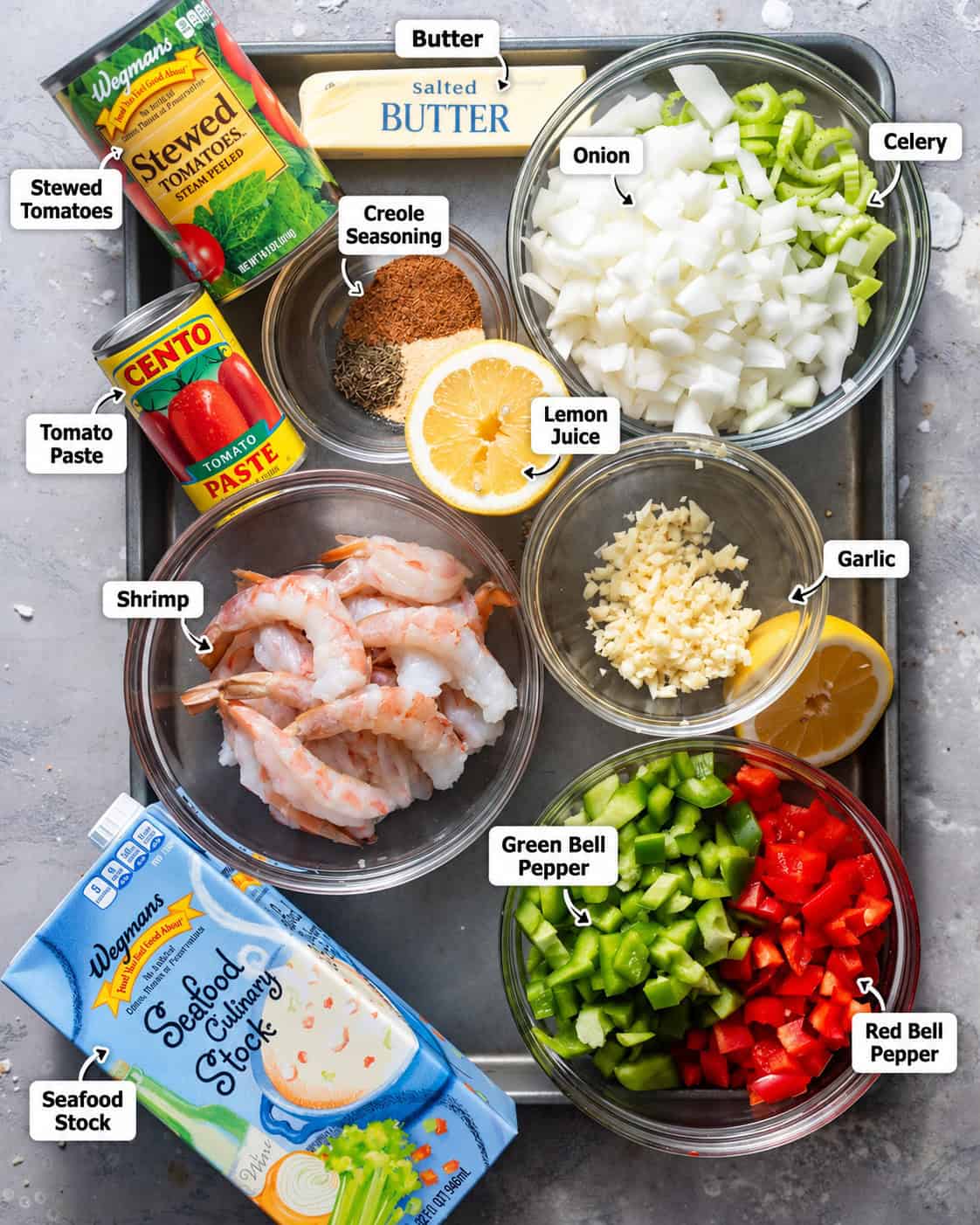
(full list of ingredients can be found in the recipe card at the bottom of this post)
- Extra-large shrimp: I love using extra-large shrimp because they’re juicy, meaty, and hold up beautifully in the sauce. Use peeled and deveined shrimp for easier eating. Save leftovers and make my BBQ Shrimp recipe or shrimp po boys next.
- Seafood stock: Gives the sauce a deeper seafood flavor than water alone. You should be able to find this at the grocery store, however, in a pinch you can use chicken broth if you can’t find it.
- Tomato paste and stewed tomatoes: Tomato paste adds concentrated tomato flavor, while stewed tomatoes add texture, sweetness, and acidity.
- The holy trinity: Onion, bell peppers, and celery are the foundation of Louisiana Creole and Cajun cooking. Together, they create a sweet, savory base that gives the sauce its signature flavor. You can find holy trinity in things like chicken and sausage jambalaya and cajun seafood gumbo.
- Creole seasoning: The main flavor builder! I combine it with onion powder, garlic powder, and dried thyme for an extra punch of flavor. You can use my homemade Cajun seasoning if that’s what you have on hand.
- Heavy cream: My little twist! It softens the acidity of the tomatoes and gives the sauce a silky, creamy finish.
How To Make Louisiana Shrimp Creole

Step 1: Season and sear the shrimp. Combine Creole seasoning, onion powder, garlic powder, and dried thyme. Pat the shrimp dry, then season with 1 tablespoon of the seasoning blend and a little salt. Heat olive oil in a large skillet over medium heat. Cook the shrimp for about 2 minutes per side, depending on their size, until just cooked through. Remove from the skillet and set aside.

Step 2: Cook the vegetables. Melt the butter in the same skillet, then add the onion, bell peppers, and celery. Cook for 5–7 minutes until softened. Stir in the garlic, remaining seasoning blend, and tomato paste. Cook for another 3–4 minutes, stirring frequently, until the tomato paste darkens slightly.

Step 3: Simmer the Creole sauce. Pour in the seafood stock and stewed tomatoes, stirring to release the flavorful browned bits from the skillet. Bring to a boil, then reduce to a gentle simmer. Cook uncovered for 15–20 minutes, until the sauce thickens slightly. Britney’s Tip: Your sauce should be thick enough to coat a spoon but still loose enough to spoon generously over rice. If it gets too thick, stir in a splash of seafood stock.

Step 4: Finish and serve. Stir in the heavy cream, hot sauce, and Worcestershire sauce. Taste and adjust the seasoning. Return the shrimp to the skillet just long enough to warm through, then finish with fresh parsley and green onions. Serve over warm white rice and enjoy!
Britney’s Cooking Tips
- Don’t overcook the shrimp. (I only say this because it’s really easy to do, shrimp cook quickly! !). As soon as the shrimp is pink, opaque, and slightly curled (in the shape of a “C”), it’s done cooking. Remove it from the pan and set it aside.
- Pat the shrimp dry. Removing excess moisture helps the seasoning stick and encourages a better sear instead of steaming.
- Watch the salt. Not all creole seasoning blends are the exact same. If your blend has salt in it, taste as you go so that you don’t over salt the dish.
- Let the sauce reduce. Don’t skip the uncovered simmer! It thickens the sauce naturally without requiring a flour-based roux. If it begins to thicken too quickly, add additional seafood stock or water.
- Using frozen shrimp? No problem! Place them in a sealed bag and submerge in cold water until thawed, about 20-30 minutes depending on their size. Pat them completely dry before seasoning, and cook immediately after thawing.

What to Serve with Shrimp Creole
You really can’t go wrong with a generous serving of fluffy white rice! The rice soaks up all that flavorful tomato sauce and makes this meal extra satisfying.
I also love serving it with my Honey Butter Cornbread or Cornbread Biscuits. Because if there’s sauce left on the plate, you already know we’re gonna need something to sop it up! You can also serve it with Cajun coleslaw, fried okra, or soul food potato salad for a classic soul-food style meal.
Storage and Reheating
Store leftover shrimp creole in an airtight container in the refrigerator for up to 3 days. When reheating, warm gently in a skillet over medium-low heat until heated through. Avoid boiling the sauce because the shrimp can become rubbery.
Make-ahead tip: Prepare the tomato sauce a day ahead and refrigerate it separately. When you’re ready to serve, reheat the sauce and cook the shrimp fresh for the best texture.
Shrimp Creole Recipe FAQs
Both are popular Louisiana shrimp dishes, but shrimp Creole is known for its tomato-forward sauce, while shrimp étouffée typically gets its thicker, gravy-like consistency from a blonde roux like the one we use in my Cajun crawfish etouffee. Both are delicious served over rice!
Absolutely! Frozen shrimp work beautifully in this recipe. Just thaw them completely, drain any excess liquid, and pat them dry before seasoning. This helps them sear properly instead of steaming.
The easiest way is to let the sauce simmer uncovered so the excess liquid evaporates. The tomato paste also helps give the sauce body. If it’s still too thin, simmer it a few minutes longer before adding the shrimp.
Shrimp Creole typically has some warmth from its seasoning and hot sauce, but it isn’t overly spicy. You can adjust the heat to suit your taste by using less hot sauce or choosing a milder Creole seasoning blend.
More Southern Seafood Recipes To Try

Main Course
Seafood Boil Recipe with Garlic Butter Sauce

Appetizers
Shrimp Remoulade

Main Course
Fried Catfish Recipe

Main Course
Cajun Seafood Gumbo
Want more delicious recipes? Subscribe to my newsletter to receive the latest seasonal creations as soon as they’re released!
If you make this Shrimp Creole Recipe, please leave a star rating on the recipe card and comment below! You can also tag @BritneyBreaksBread on Instagram and hashtag #britneybreaksbread so I can celebrate your beautiful creations!
Louisiana Shrimp Creole

Equipment
Ingredients
Seasoning Blend
- 1 1/2 tbsp Creole Seasoning
- 1 1/2 tsp Onion Powder
- 1 tsp Garlic Powder
- 1/2 tsp Dried Thyme
Shrimp Creole
- 1 lb Extra Large Shrimp
- 2 tbsp Olive Oil
- 4 tbsp Salted Butter
- 1 large Yellow Onion, (diced)
- 2 Bell Peppers, (diced)
- 3 stalks Celery, (diced)
- 6 cloves Garlic, (diced)
- 6 oz Tomato Paste
- 14.5 oz Canned Stewed Tomatoes
- 2 Bay Leaves
- 2 cups Seafood Stock
- 1/2 cup Heavy Cream
- 1 tbsp Hot Sauce
- 2 tsp Worcestershire Sauce
- 2 tbsp Fresh Parsley, (chopped)
- Green Onions, (for garnish)
Instructions
- In a small bowl, mix together creole seasoning (or cajun seasoning), onion powder, garlic powder, and dried thyme.
- Pat shrimp dry with a paper towel and add 1 tbsp of the seasoning mix to the shrimp. Season with salt. Drizzle olive oil into a large skillet over medium heat, then add the shrimp and cook on both sides for about 2 minutes. Remove from the skillet and set aside.
- Add butter to the pan and allow it to melt. Add in the onion, celery, and bell pepper and cook for 5-7 minutes, until slightly softened and browned. Add in the remainder of the seasoning mix, garlic, and tomato paste. Mix everything together and continue to cook for 3-4 minutes, until everything is combined. Pour in seafood stock, stewed tomatoes, and bay leaves. Bring to a boil, then reduce heat to low heat. Cook uncovered for 15-20 minutes, allowing the mixture to reduce and thicken slightly.
- Add in the worcestershire sauce and hot sauce. Remove bay leaves. Taste for black pepper and salt and add more as needed. Stir together and remove from heat. Add in shrimp and fresh parsley and garnish with diced green onion. Serve atop white rice.
Notes
-
- Don’t overcook the shrimp. (I only say this because it’s really easy to do, shrimp cook quickly! !). As soon as the shrimp is pink, opaque, and slightly curled (in the shape of a “C”), it’s done cooking. Remove it from the pan and set it aside.
- Pat the shrimp dry. Removing excess moisture helps the seasoning stick and encourages a better sear instead of steaming.
- Watch the salt. Not all creole seasoning blends are the exact same. If your blend has salt in it, taste as you go so that you don’t over salt the dish.
- Let the sauce reduce. Don’t skip the uncovered simmer! It thickens the sauce naturally without requiring a flour-based roux. If it begins to thicken too quickly, add additional seafood stock or water.
- Using frozen shrimp? No problem! Place them in a sealed bag and submerge in cold water until thawed, about 20-30 minutes depending on their size. Pat them completely dry before seasoning, and cook immediately after thawing.
Nutrition
Nutrition information is automatically calculated, so should only be used as an approximation.




My family and I loved this recipe. It was easy to prepare, even on a weeknight. So full of different flavors that blended well together. The leftovers were even better! Definitely on our repeat offenders recipe list!