Steak Au Poivre
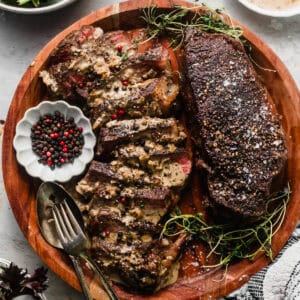
Steak au poivre is a peppercorn crusted steak seared until golden, then finished in a rich, creamy pan sauce with shallots, Cognac, and cream.
Equipment
- Spice Grinder
- Wire Rack with Baking Sheet
- Cast Iron Skillet
Ingredients
- 2 New York Strip Steaks, (about 1.5 inch thickness)
- Kosher Salt, Black Pepper and Garlic Powder, (enough to generously coat the steak)
- 3 tbsp Whole Black Peppercorns
- 2 tbsp Olive Oil, (or any high smoke point oil)
- 2 tbsp Salted Butter
- 3 sprigs Fresh Thyme
- 3 sprigs Fresh Rosemary
- 2 cloves Garlic, (smashed)
Creamy Peppercorn Sauce
- 2 tbsp Salted Butter
- 1 Whole Shallot, (minced)
- 4 cloves Garlic, (minced)
- 1/2 cup Cognac, (or Brandy)
- 1 1/2 tsp Beef Bouillon Paste
- 3/4 cup Beef Stock
- 1/2 cup Heavy Cream, (or 1/3 cup creme fraiche)
- 2 tsp Dijon Mustard
- 1 tbsp Lemon Juice
- 2 tsp Balsamic Vinegar
Instructions
- Pat the steaks dry with a paper towel. Season both sides of the NY strips generously with kosher salt, black pepper, and garlic powder. (Optional: Place them uncovered on a wire rack or plate in the fridge overnight, up to 24 hours. This dries the surface and seasons the meat all the way through. If you have the time, this makes a HUGE difference, trust me!) 2 New York Strip Steaks Kosher Salt, Black Pepper and Garlic Powder
- Before cooking, allow the steak to come to room temperature, about 30-45 minutes.
- Add the whole peppercorns to a spice grinder or food processor and pulse just until crushed, not powdered. You want texture, not dust/uniform crumbs. 3 tbsp Whole Black Peppercorns
- Add the peppercorns to a shallow plate. Place the steak onto the plate and press the peppercorns firmly into all sides of the steaks. Make sure to really coat the steak well. You'll have some leftover peppercorns, save them. We're going to use it in the sauce.
- Heat a cast iron skillet over high heat until screaming hot. Add oil and sear steaks for 4 minutes per side, pressing gently to ensure full contact with the pan. This promotes even browning. 2 tbsp Olive Oil
- The last minute of cooking, add butter, fresh thyme and rosemary, and smashed garlic to the pan. Spoon butter and baste the steaks continuously for about 30 seconds, tilting the pan and spooning the butter over the top of the steak. Use a meat thermometer to cook until desired doneness (see notes). I like to cook to 125 degrees F, which gives me perfectly medium steak as the steak continues to cook when it's off of the heat. Be sure to remove from the pan 5 degrees under your desired level of doneness. 2 tbsp Salted Butter 3 sprigs Fresh Thyme 3 sprigs Fresh Rosemary 2 cloves Garlic
- Remove the steaks from the pan and place onto a plate. Cover with aluminum foil.
- Discard excess fat, leaving behind about 1–2 tablespoons of drippings. Lower heat to medium heat. Add butter to the pan, followed by the minced shallot. Cook for 1–2 minutes until soft and translucent, not browned. Then add minced garlic, crushed peppercorns, and beef bouillon. Cook for 30 seconds, just until fragrant. 2 tbsp Salted Butter 1 Whole Shallot 4 cloves Garlic 1 1/2 tsp Beef Bouillon Paste
- Remove the pan from heat and slowly pour in the Cognac. Return to the heat and simmer until it’s almost completely evaporated, about 3-5 minutes. Add beef stock. Simmer for 3–4 minutes, letting the sauce reduce slightly. 1/2 cup Cognac 3/4 cup Beef Stock
- Whisk in Dijon mustard, then lower the heat and stir in heavy cream (or crème fraîche). Let the sauce gently simmer until thick enough to coat the back of a spoon, about 7-10 minutes. Finish with lemon juice, balsamic vinegar, and taste. Adjust salt if needed. 2 tsp Dijon Mustard 1/2 cup Heavy Cream 1 tbsp Lemon Juice 2 tsp Balsamic Vinegar
Notes
- Let the steaks sit at room temperature for 30-45 minutes before cooking. This ensures the steaks cook evenly.
- Press the pepper into the steak firmly. This helps it adhere and form that signature crust without falling off in the pan.
- Get the pan smoking hot before cooking the steak. This is the secret to getting that perfectly browned crust.
- Rest the steak 5-10 minutes after cooking. This keeps the juices inside the meat instead of running all over your cutting board.
Steak Doneness Temps
- Rare: 120-125°F (cool red center)
- Medium Rare: 130-135°F (warm red center)
- Medium: 140-145°F (warm pink center)
- Medium Well: 150-155°F (slight pink)
- Well Done: 160°F+ (no pink)
Nutrition
Calories: 1213kcal, Carbohydrates: 18g, Protein: 51g, Fat: 91g, Saturated Fat: 45g, Polyunsaturated Fat: 5g, Monounsaturated Fat: 37g, Trans Fat: 1g, Cholesterol: 265mg, Sodium: 725mg, Potassium: 1029mg, Fiber: 5g, Sugar: 4g, Vitamin A: 1771IU, Vitamin C: 10mg, Calcium: 166mg, Iron: 6mg
Nutrition information is automatically calculated, so should only be used as an approximation.
Tried this recipe?Mention @BritneyBreaksBread or tag #BritneyBreaksBread!